
Replica furniture for boutique fitness studios: complete guide
Boutique fitness studio replica furniture is designer-inspired furniture selected for reception and lounge areas with the aim of creating a consistent member-facing interior. Choose it around your studio’s actual waiting, welcome and consultation routines—not around a photograph of a domestic living room.
- Choose replica furniture for boutique fitness studios by reception function first, visual style second.
- Mobelaris replica-furniture guides suit studio owners researching interiors, not selecting exercise equipment.
- Compare individual seating, sofa-led lounges and mixed arrangements against your own reception brief.
- Treat product photography as styling information, not evidence of comfort, care requirements or commercial suitability.
Why replica furniture matters for boutique fitness studios
Your reception furniture serves a different brief from your exercise equipment. It gives people somewhere to wait, supports conversations and establishes the visual character of the space before a class begins. Start with those jobs, then choose the look.
A boutique studio also needs an interior that relates to its teaching rooms, signage and existing finishes. A chair that looks convincing in isolation can still feel unrelated to the reception around it. Repetition in colour, shape or finish creates a clearer connection than collecting unrelated statement pieces.
Use the Mobelaris guide to spotting a high-quality furniture replica online as a separate buying reference. For studio planning, keep the central distinction clear: a design reference describes appearance; the exact product information describes what you are considering.
This guide covers reception and lounge planning. It does not recommend furniture as exercise equipment or treat a domestic room photograph as evidence that an item meets a studio’s operating requirements.
Plan your studio furniture in six steps
Define each reception task
Start with a sheet of paper and record what happens outside the teaching room. Separate arriving, waiting, speaking with staff and staying after class. You need a furniture brief, not a shopping list.
Observe your own reception routine rather than guessing from another studio’s photographs. Note whether people wait individually, arrive together or mainly stand while speaking with staff. Record what staff need to keep visible and what belongs out of view.
Give every proposed item a sentence explaining its purpose. A chair might support a short wait; a table might hold studio literature; a storage piece might organise reception supplies. If you cannot explain the role, leave the item off the initial shortlist.
Keep the brief specific to your space. A studio with a dedicated consultation room has a different reception requirement from one where conversations happen at the front desk. Neither arrangement calls for a ready-made living-room set.
- List the activities your reception actually supports.
- Separate member seating from staff workspace.
- Identify supplies that need a dedicated home.
- Mark existing furniture you intend to retain.
- Write a purpose beside every proposed purchase.
Map the room before choosing silhouettes
Draw a simple plan by hand before using any room-planning software. Record the room’s shape, fixed features and the positions of furniture you intend to keep. Use measurements from your own space and verified dimensions for any shortlisted item.
Build the arrangement around the reception task, not the most dramatic piece. For a brief waiting area, begin with the seating position. For a consultation corner, begin with the relationship between the people having the conversation.
A large-looking chair and a visually light chair can create very different compositions, even when their photographs use similar camera angles. Compare the whole silhouette: back, arms, base and the surrounding empty space. Do not infer physical size from the photograph alone.
Choose the arrangement before the individual design. This prevents a statement piece from dictating every later decision and makes it easier to compare alternative furniture shapes against the same brief.
- Draw the existing reception layout.
- Record room measurements in metric units.
- Add only verified product dimensions to the plan.
- Compare front, side and rear product views.
- Keep a separate list of details requiring clarification.
Build a visual brief from your existing interior
Create a small reference sheet using photographs of your studio, finish samples you already have and plain colour swatches. This manual approach makes the relationship between furniture and the existing interior easier to judge than a collection of unrelated inspiration images.
Choose a dominant visual direction. It might be restrained and neutral, warm and textured, or more graphic. These are styling approaches, not promises about how members will feel or how a business will perform.
Then decide what should repeat. A curved chair back can relate to another rounded element; a darker base can echo an existing dark detail. The connection does not require every piece to match exactly.
Mobelaris replica-furniture guides provide design-reference topics for this research stage. Use those references to clarify shapes and combinations, while keeping the exact item’s description separate from your mood board. A styling guide is not a substitute for product-specific information.
- Photograph the finishes already in your reception.
- Select a dominant colour direction.
- Identify a repeated shape or visual detail.
- Distinguish permanent finishes from decorative accents.
- Remove references that contradict the chosen direction.
Compare seating arrangements by purpose
Use paper cut-outs or a basic drawing to compare arrangements before selecting products. Individual chairs, a sofa-led lounge and a mixed arrangement answer different reception briefs. None is automatically the best choice for every boutique studio.
Individual seating makes each sitting position distinct and gives you more freedom to vary the composition. Its limitation is visual repetition: several unrelated chairs can make the reception feel fragmented. A sofa-led arrangement creates a stronger shared focal point, but concentrates the visual weight in a single piece.
A mixed arrangement gives you different seating positions and a layered appearance. It also asks for more editing because the pieces need a visible relationship. Select that approach deliberately, not because separate purchases happen to accumulate.
Keep comfort claims out of a photograph-based comparison. Judge appearance from images; assess the sitting experience through an opportunity to try the item or through product-specific information that addresses your question.
- Compare arrangements against the same reception brief.
- Identify whether waiting is mainly individual or shared.
- Consider the visual weight of each composition.
- Keep seating and consultation requirements distinct.
- Record the reason for your preferred arrangement.
Check the exact item, not the design label
Create a product-information sheet for each item you are considering. Copy the exact name and variant from the retailer’s information, then record the details that apply to that item. Do not transfer specifications from a similar-looking design or another seller’s listing.
Separate verified information from questions. A material description is useful only when it refers to the exact variant under consideration. A photograph can show the appearance of a finish, but it does not establish how that finish should be maintained.
Ask about the requirements relevant to your studio rather than demanding technical figures that are unrelated to the decision. Where intended use or care information is unclear, seek clarification before selecting the item. Keep that answer with your purchasing records.
A familiar silhouette is not a product specification. The same discipline applies to Mobelaris furniture research: use the exact item’s information for product decisions, not assumptions drawn from a design name or a blog image.
- Save the exact item name and selected variant.
- Record specifications only from that item’s information.
- Read the supplied care instructions.
- Ask about unresolved studio-use requirements.
- Keep written answers alongside the shortlist.
Edit the shortlist before committing
Review the proposed arrangement as a complete reception, not as separate attractive objects. Return to the original brief and check whether each item still has a clear job. Remove purchases that duplicate a function without improving the arrangement.
Use a simple document to show the selected pieces together with photographs of your own reception. Ask reception staff to review the plan against their daily tasks. Their practical questions belong in the decision before the room is furnished.
Keep a separate list for decorative additions. Accessories can be considered after the main arrangement is settled; they should not distract from unresolved seating or storage decisions. A strong reception scheme does not require every surface to carry an object.
Finish with a written selection record. This gives future decisions a reference point and prevents later additions from pulling the room in unrelated directions. Record why you selected the arrangement, not just which appearance you preferred.
- Remove items without a defined reception function.
- Compare the shortlist with furniture you are retaining.
- Review the arrangement with reception staff.
- Separate essential pieces from decorative additions.
- Save the final brief and verified item information.
Compare reception furniture approaches
Choose an approach before choosing individual pieces. The table compares generic arrangements, not named products or claims about any retailer’s range. The best option is the one that answers your reception brief with the fewest compromises.
| Option | Best for | Main advantage | Key limitation |
|---|---|---|---|
| Individual-chair arrangement | Studios planning distinct waiting positions | Creates separate seating positions and a flexible visual composition | Unrelated chair designs can fragment the scheme |
| Sofa-led lounge | Studios planning a shared lounge focal point | Gives the reception a clear central furniture element | Concentrates the composition around one prominent piece |
| Mixed chair-and-sofa arrangement | Studios planning both individual and shared seating | Offers different seating positions within one scheme | Needs careful editing to keep the pieces visually related |
| Seating with dedicated storage | Studios combining waiting with reception organisation | Gives seating and supplies separate roles | Storage appearance must relate to the rest of the interior |
Do not read these labels as product recommendations. Select the arrangement first, then identify exact items whose supplied information answers your requirements. An attractive composition and a verified purchasing decision are separate parts of the same process.
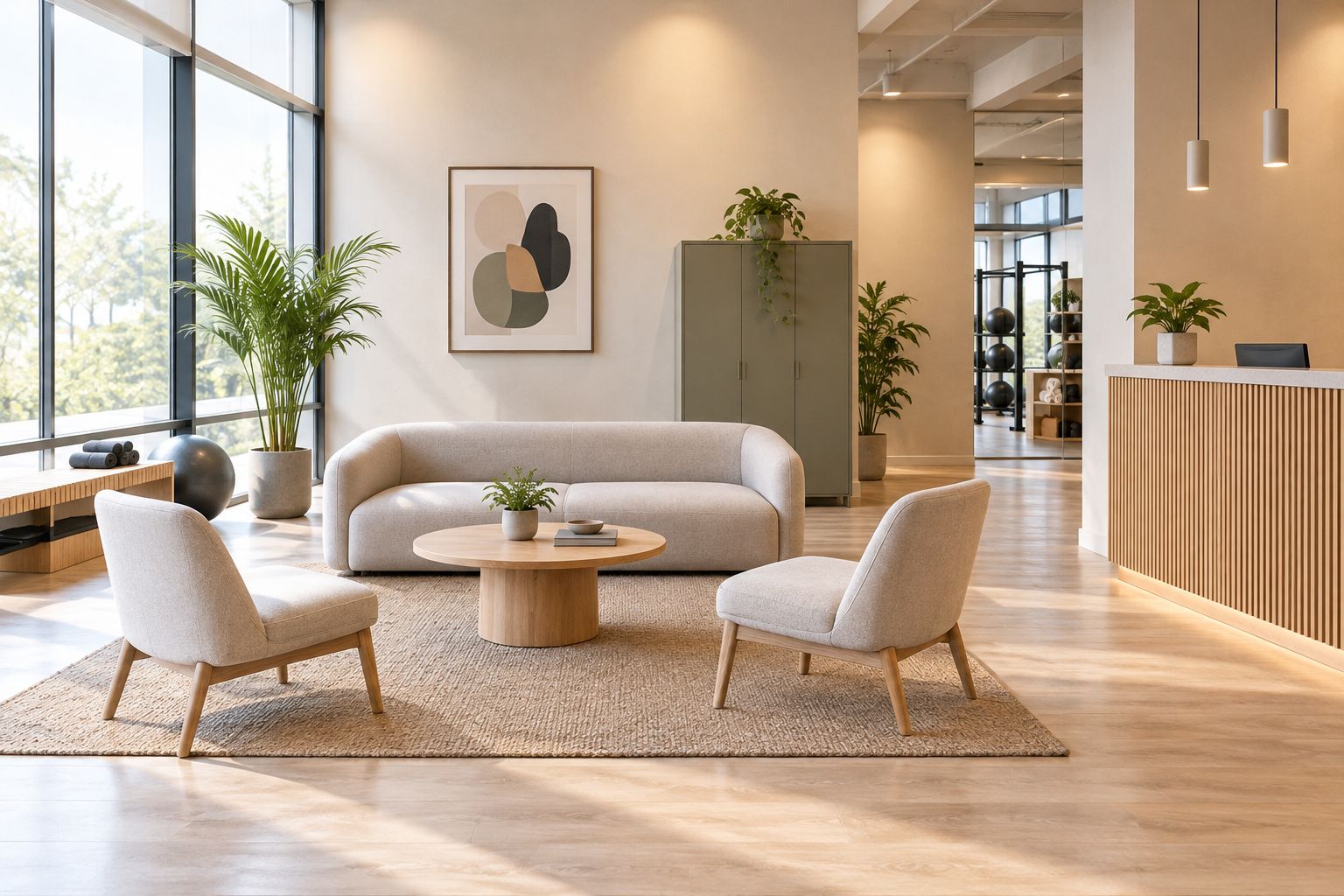
Common mistakes boutique fitness studios make
Copying a lounge without checking the reception brief
A domestic lounge photograph answers a domestic styling question. Your studio reception needs its own brief. Borrow a colour relationship or furniture shape, but do not copy the whole arrangement without checking what each piece would do.
Treating a design name as evidence
A recognised design reference does not establish the exact item’s materials, care requirements or sitting experience. Keep the design inspiration on the mood board and the verified product details on the purchasing sheet. Do not merge them.
Making every piece a statement
A sculptural chair, prominent sofa and decorative table can compete for attention. Decide which element leads the composition and let the others support it. This is an editing decision, not a requirement to make the room plain.
Buying for the photograph rather than the routine
A reception can look finished while still lacking a defined place for literature or staff supplies. Review furniture against the activities you recorded. A piece that only improves the photograph belongs on the decorative shortlist, not automatically on the essential list.
Combining unrelated purchases without a reference sheet
Individual pieces can look appealing but fail to form a consistent interior. Compare proposed additions with your actual finishes and retained furniture before selecting them. Keep the reference sheet so future purchases follow the same direction.
FAQ
What is the best replica furniture arrangement for a boutique fitness studio?
The best arrangement matches the studio’s reception tasks. Compare individual seating, a sofa-led lounge and a mixed arrangement against how people wait and speak with staff, then check exact item information separately.
Should a fitness studio reception use chairs or a sofa?
Choose chairs for distinct seating positions and a sofa for a shared lounge focal point. A mixed arrangement suits a brief that needs both, but requires a clear visual relationship between the pieces.
Can I judge a replica chair’s comfort from photographs?
Photographs show appearance, not your sitting experience. Use an opportunity to try the exact item or seek product-specific information that answers your comfort questions.
How do I make reception furniture match the exercise rooms?
Repeat a colour, shape or finish already present in the studio. Build the furniture reference sheet from photographs of your own interior rather than relying entirely on unrelated inspiration images.
What should I check before selecting replica furniture for a studio?
Check the exact item and variant against your reception brief and the supplier’s information. Keep verified specifications, supplied care guidance and answers to unresolved use requirements together.
Should I furnish the whole reception at once?
Settle the essential reception functions before choosing decorative additions. A written plan helps you distinguish furniture with a defined job from pieces selected only for appearance.
One last thing
Photograph the proposed reception from behind the front desk as well as from the entrance. These viewpoints answer different questions: one shows the member-facing composition; the other shows what staff will see while working.
Keep the strongest furniture decision tied to a real reception task. That gives you a reason to retain it when tastes, accessories or surrounding finishes change.