
Best mid-century nightstand replicas for guest bedrooms
Best overall for a guest bedroom: the two-drawer tapered-leg nightstand. Best for tight rooms: the open-shelf nightstand. Best for tidy hosts: the closed-door cabinet style. A mid century nightstand replica gives a spare room the look of a designer bedroom without a designer budget, provided you pick the form that fits how guests actually use the room.
- The two-drawer tapered-leg nightstand is the safest default for most guest bedrooms.
- Open-shelf styles suit narrow rooms, but they show clutter.
- Closed-door cabinets hide luggage-sized mess and suit hosts who like a clean look.
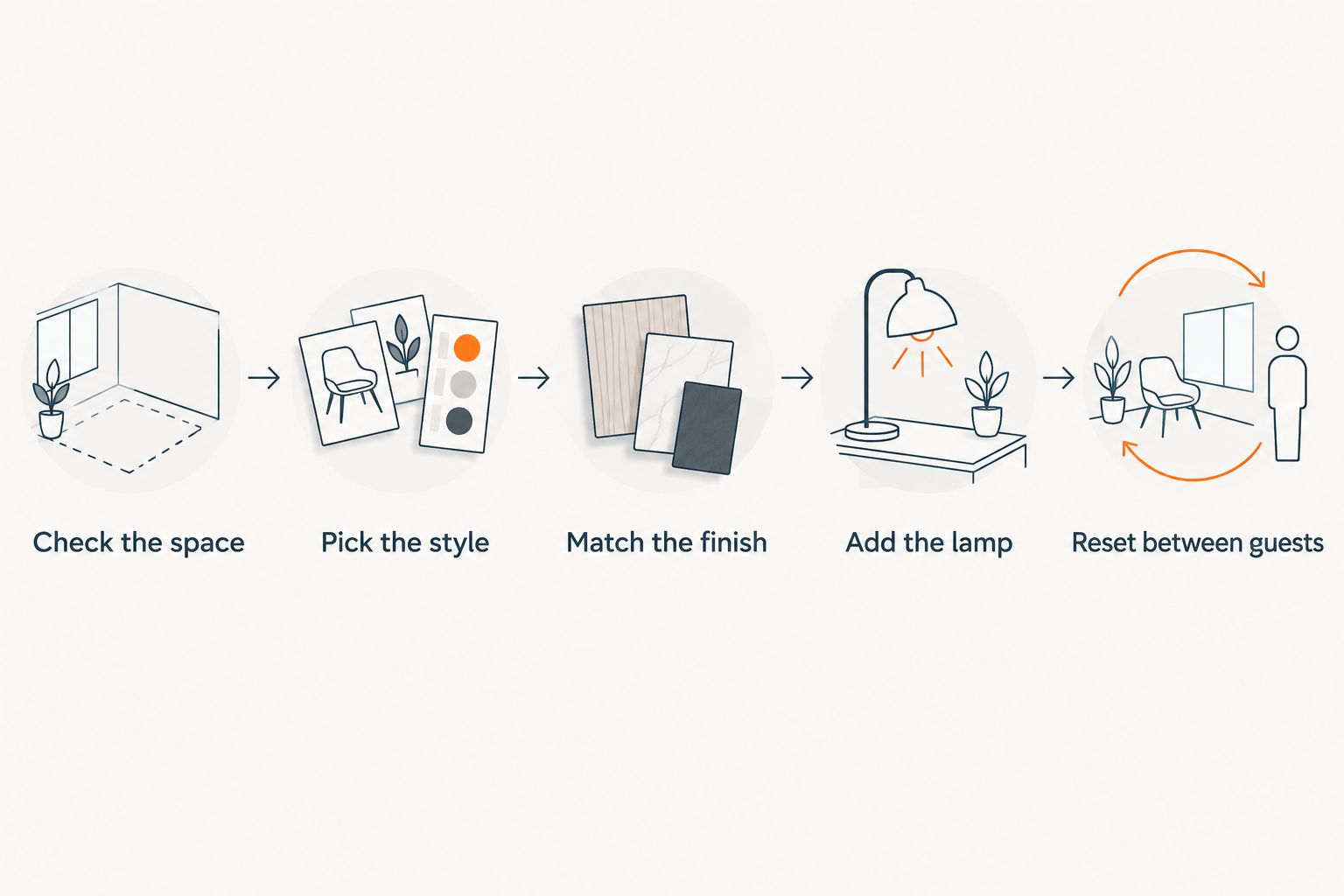
- Match the nightstand to the bed frame first, then to the lamp.
Why a guest bedroom needs a different nightstand
A nightstand in your own bedroom holds your habits. A nightstand in a guest room holds a stranger's phone, glasses, a water glass and maybe a book. It needs to be obvious and empty by default.
That changes the brief. You want clear surface space, one or two places to put things away, and a shape that looks right next to almost any bed. Nothing fussy, nothing that needs explaining.
Mid-century design suits this well. Tapered legs, clean lines and warm wood tones sit comfortably beside both modern and traditional bedding. For the wider picture on what to look for in this style, see how to spot a high-quality furniture replica online.
What makes a good guest bedroom nightstand
Use these five criteria to audit any pick below before you read the table.
- Surface space: room for a lamp plus a glass and a phone without stacking.
- Storage you can leave empty: a drawer or shelf that guests can use, with nothing in it by default.
- Footprint: it must fit beside the bed without blocking the way in.
- Finish: a wood tone or colour that sits well with your bed frame and floor.
- Upkeep: a surface that wipes clean between visitors.
Nightstand styles at a glance
| Style | Best for | Standout feature | Key limitation |
|---|---|---|---|
| Two-drawer tapered-leg | Most guest rooms | Closed storage plus a clear top | Needs a little more floor space |
| Open-shelf | Narrow rooms | Light, airy look | Shows everything on the shelf |
| Closed-door cabinet | Tidy, minimal rooms | Hides clutter completely | Doors need swing room |
| Single-drawer slim | Very small rooms | Smallest footprint | Little storage |
| Floating-look pedestal | Rooms with a statement bed | Sculptural shape | Less practical storage |
1. Two-drawer tapered-leg nightstand: best nightstand for most guest rooms
This is the shape most people picture when they hear mid century nightstand. A boxy top, one or two drawers and splayed, tapered legs that lift the piece off the floor.
Two-drawer tapered-leg pros:
- Closed storage for spare chargers, a torch or a tissue box
- A flat top that takes a lamp easily
- Legs keep the floor visible, so the room feels lighter
- Looks right beside almost any bed frame
Two-drawer tapered-leg cons:
- Takes more floor space than a slim style
- Drawers can end up holding forgotten items if you do not check them between guests
Best for: a standard guest room where one nightstand style has to please everyone. Verdict: Buy.
The wood tone matters more than the drawer count. Warm walnut-look finishes pair with white or grey bedding, while paler oak-look finishes suit smaller, brighter rooms.
2. Open-shelf nightstand: best nightstand for narrow guest rooms
An open-shelf style swaps drawers for one or two shelves. It reads as lighter and takes up less visual weight, which helps in a room where the bed already fills most of the wall.
Open-shelf pros:
- Looks smaller than a drawer unit of the same width
- Easy to wipe down
- A basket on the shelf gives guests a place for small items
Open-shelf cons:
- Nothing is hidden, so you have to style it
- Fewer places to tuck away cables
Best for: narrow rooms and hosts who like a curated look. Verdict: Buy if you will keep it styled; otherwise hold.
3. Closed-door cabinet nightstand: best nightstand for a clutter-free look
A cabinet-style nightstand puts a door over the storage. The front stays calm whatever is inside, which is the main reason to pick it for a room that sits empty for weeks.
Closed-door pros:
- Hides everything behind a clean front
- Gives the room a more furniture-like, finished feel
- Works well beside upholstered or wooden beds
Closed-door cons:
- Doors need space to open, so check the gap beside the bed
- Guests may not realise the cabinet is free to use unless you tell them
Best for: minimal rooms where visual calm matters most. Verdict: Buy for minimal rooms, skip for very tight ones.
4. Single-drawer slim nightstand: best nightstand for very small rooms
When the bed is pushed into a corner and every centimetre counts, a slim single-drawer style fits where a full unit will not. It handles the basics and nothing more.
Single-drawer slim pros:
- Smallest footprint of the five styles
- Still gives guests one closed place to store things
- Keeps the walkway clear
Single-drawer slim cons:
- Limited top space, so a large lamp can crowd it
- Little room for anything beyond essentials
Best for: box rooms and converted offices. Verdict: Hold unless space forces your hand.
5. Floating-look pedestal nightstand: best nightstand for a statement bed
Sculptural pedestal and round-top forms treat the nightstand as part of the design. They suit a bold bed frame, but they trade away some practicality.
Pedestal pros:
- Strong visual shape that complements a statement bed
- Round tops soften a small room's corners
Pedestal cons:
- Storage is limited or absent
- Harder to match to everyday bedding and lamps
Best for: guest rooms styled like a boutique stay. Verdict: Wait until you have chosen the bed.
How the styles were ranked
The order follows the criteria above: how well each style covers surface space, usable storage, footprint, finish flexibility and upkeep for a room that changes occupant often. It is a design judgement, not a product test. Check the product page for the exact dimensions and materials of any piece you consider.
Which mid century nightstand should you choose?
Start with the two-drawer tapered-leg style. It handles the widest range of rooms and guests. Move to the open-shelf style if the room is narrow, the closed-door cabinet if you want calm, and the slim single-drawer only when space leaves you no choice.
If you are furnishing the whole room, these guides cover the pieces that sit alongside a nightstand:
- Best replica mid-century nightstands for bedrooms covers the same category for main bedrooms.
- Best replica mid-century dressers for bedroom storage helps if the guest room also needs clothes storage.
Styling a guest room nightstand
Keep the top nearly bare. A small lamp, a coaster and a carafe say "this is yours for the weekend" better than a full display.
Leave one drawer or shelf empty and tell guests it is free to use. Check it between visits so nothing is left behind.
Bring the lamp into the same period as the nightstand. A simple ceramic or metal base works. For ideas, see how to light a mid-century modern room with replica lamps.
FAQ
What is the best mid century nightstand for a guest bedroom?
A two-drawer tapered-leg nightstand is the best default. It gives closed storage and a clear top, and it suits most bed frames.
Is an open-shelf nightstand a good idea for guests?
Yes, in a narrow room. It looks lighter than a drawer unit, but everything on the shelf is visible, so keep it styled.
Do I need two nightstands in a guest room?
Not always. One on the side guests use most is enough in a small room. A pair looks more balanced in a larger room with a double bed.
What finish works best for a mid century nightstand?
Choose a wood tone that sits near your bed frame and floor. Warm tones suit white or grey bedding, while paler tones suit small, bright rooms.
How do I keep a guest room nightstand tidy?
Leave the top almost bare, keep one drawer or shelf empty, and reset it between visits.
Is a replica nightstand a good choice for a spare room?
It is a sensible fit, since a spare room gets lighter use and you still get the mid-century look. Check the product page for materials and dimensions before you buy.
One last thing
Choose the nightstand last, not first. Settle the bed, the lamp and the floor space, then pick the style that fills the gap. A nightstand that suits the room will almost always beat one picked for its own looks.