
Is there a dupe for the Alvar Aalto beehive lamp?
Yes. Several makers sell pendant lights shaped like the Alvar Aalto beehive lamp: a domed shade built from stacked, overlapping brass-toned rings. They differ in shade construction, finish and proportions, and those details decide whether one reads as a convincing alternative or a flat imitation.
- An alvar aalto beehive lamp dupe is easy to find; a good one is not.
- Judge the shade first: the stacked-ring structure and the way light escapes between rings.
- Check finish, drop length and shade diameter against your room before ordering.
- Buy a dupe if you want the look; buy the original if you want the original maker's name on it.
Is there a dupe for the Alvar Aalto beehive lamp?
The beehive pendant is a domed shade of tiered rings, and that shape is simple enough that many manufacturers reproduce it. Search results are full of near-identical listings, so the useful question is which details separate a good version from a poor one.
The verdict: a dupe suits you if you want the beehive silhouette and warm, banded light over a dining table, kitchen island or stairwell, and you are not buying for the maker's name. It does not suit you if provenance matters to you. That is the original's job.
Browse the lighting range at Mobelaris for current designer-inspired pendants, and check the product page for each lamp's stated materials and dimensions before you decide.
What makes a beehive lamp dupe look right
The original's character comes from three things: the layered rings, the dome proportion and the finish. A dupe that gets all three right looks right from across the room. One that misses even one looks like a generic dome.
- Ring structure. Look for distinct, evenly spaced tiers with visible gaps or overlaps. Photos showing one smooth, solid dome mean the stacked effect is only printed or stamped on.
- Dome proportion. The shade should look rounded and slightly squat, not pointed and not a flat bowl.
- Finish. Brass-toned and darker metal finishes read very differently on a wall of daylight versus a dim room. Compare listing photos in more than one lighting condition.
- Light pattern. Gaps between the rings throw banded light on the ceiling and walls. Check that the product images show this.
- Hanging detail. Look at the cable, the canopy and the fixing as shown on the product page, since these are what you see every day.
For a deeper look at sizing and finishes specifically, the beehive lamp replica size and finish guide covers the choices in detail.
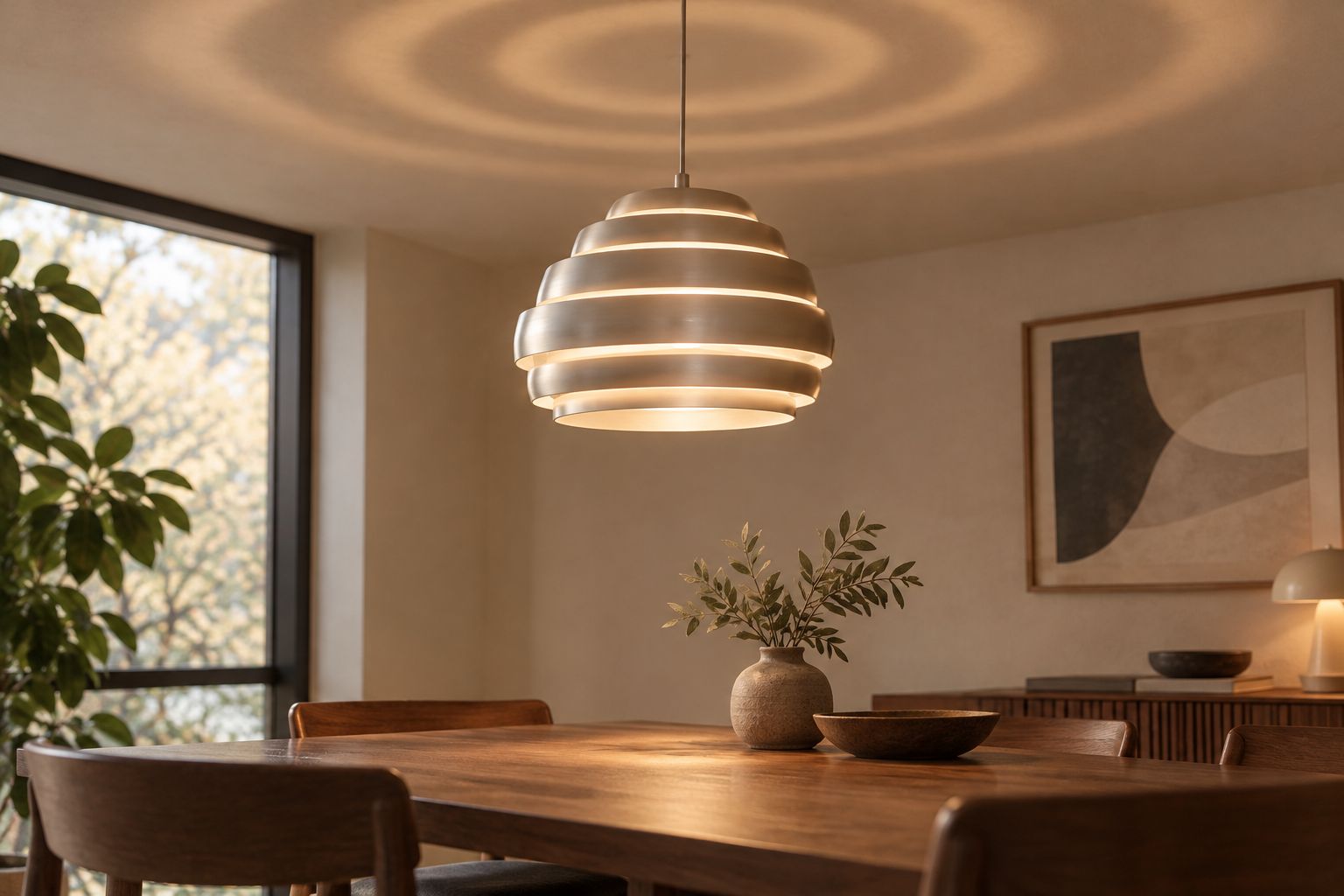
Why one beehive dupe differs from another
Two lamps can look alike in a thumbnail and differ in person. These are the factors that account for the gap.
- Shade material and how the rings are joined
- Finish colour and how it is applied
- Shade diameter and overall drop
- Fitting type and the bulb the listing specifies
- How clearly the product page documents all of the above
A listing that states its materials and dimensions plainly is a better bet than one that relies on lifestyle photos alone. If the page does not say, ask before you buy.
How to choose between a dupe and the original
The original is made and sold by its rights-holder. A dupe is a separate product inspired by the same design. They are not the same thing, and a good dupe does not need to pretend otherwise.
Choose a dupe when:
- you want the look at a lower cost than the original
- the lamp is part of a wider scheme and you are furnishing several rooms
- you are happy for the maker's name to be absent
Choose the original when:
- the designer's provenance is the point of the purchase
- you want the rights-holder's own documentation and support
Neither choice is wrong. The mistake is paying for one and getting the other, so read the listing for who actually makes the lamp.
Where a beehive-style pendant works best
The shade is a statement piece, so give it space. It works well over a dining table, above a kitchen island, in an entrance hall or in a stairwell where the banded light can fall on a wall. In a room with a low ceiling, the dome can dominate, so measure the drop before ordering.
It also pairs with other mid-century lighting. If you are building a scheme, the guide to lighting a mid-century room with replica lamps shows how to mix pendants, floor lamps and wall lights without clashing. For another sculptural pendant to compare, see the Poul Henningsen artichoke lamp buyer's guide.
Is a beehive lamp dupe worth buying?
Yes, if the listing shows real tiered rings, states its materials and gives clear dimensions. A dupe with those details can carry the look of the original in your room. A listing with vague photos and no specifications is a gamble.
What should you check before ordering a dupe online?
Check the stated materials, the shade diameter, the drop length, the finish and the bulb type. Then compare the product photos against each other for consistent ring detail. Our guide on how to spot a high-quality furniture replica online applies the same checks to lighting.
Does the finish matter as much as the shape?
Yes. A brass-toned finish and a darker metal finish change the mood of the whole room, and the finish is the detail photos most often get wrong. Look for images taken in daylight and in lamplight.
FAQ
Is there a dupe for the Alvar Aalto beehive lamp?
Yes. Several makers sell pendants with the same domed, stacked-ring shade. Quality varies, so compare ring structure, finish and stated dimensions.
What should a good beehive lamp dupe look like?
It should have distinct, evenly spaced rings and a rounded dome. The light should fall in bands through the gaps between rings.
Is a dupe the same as the original beehive lamp?
No. The original is made by its rights-holder; a dupe is a separate product inspired by the same shape. Read the listing to see who makes the lamp you are buying.
Where does a beehive-style pendant work best?
Over a dining table, a kitchen island, in an entrance hall or in a stairwell. Measure the ceiling height and drop first so the shade does not dominate the room.
What details should a product page state?
Materials, shade diameter, drop length, finish and bulb type. If any of these are missing, ask the seller before ordering.
Does finish matter when choosing a dupe?
Yes. Finish changes how the lamp reads in daylight and lamplight, so look for photos taken in both.
One last thing
Hold two product photos side by side and look only at the rings. If you cannot see where one tier ends and the next begins, the shade is probably a smooth dome with surface detail, and it will not throw the banded light that defines the design.