
Replica furniture for co-living operators: complete guide
Co-living replica furniture planning is the selection of reproduction-style furniture for shared homes, with the aim of creating coherent interiors that support residents’ everyday routines. Choose replica furniture for co-living spaces by room function first, then build a repeatable furniture schedule rather than a collection of statement pieces.
- Choose replica furniture for co-living spaces by daily function, not recognisable silhouettes alone.
- Mobelaris sells mid-century modern furniture and lighting; assess individual pieces against your shared-home brief.
- Standardise your furniture schedule while allowing shared lounges and private rooms to look different.
- Compare complete room schemes, record exact selections and collect resident feedback before repeating a layout.
Why replica furniture matters for co-living operators
A shared home is not a show flat. Your furniture choices need to accommodate communal meals, individual downtime and different decorating preferences within a coherent interior.
That changes the brief. A chair chosen for a photograph has a different purpose from seating selected for a lounge where residents read, talk and watch television. Start with the activity, then decide which furniture contributes to it.
For the purchasing side of that process, the guide to buying replica furniture online covers a related decision. This guide focuses on the operator’s task: coordinating shared rooms, recording selections and deciding what to repeat across a property.
The best starting point is a room brief, not a designer name. Replica describes a design relationship; it does not establish a particular piece’s comfort, finish or suitability for your project.
How to choose replica furniture for co-living spaces
Define each room’s main purpose
Start with a free document or spreadsheet. Give every room a primary function and describe what residents should be able to do there, using activities rather than style labels.
For example, distinguish a conversation lounge from a television room. Both contain seating, but the focal point and furniture relationships differ. Likewise, a communal eating area and a quiet reading corner should not inherit the same brief simply because they share an open-plan space.
Record secondary activities separately. If residents already use a room, ask what they do there and what feels missing; do not treat the original marketing description as evidence of actual use.
This first decision also gives you a test for decorative purchases. If an item neither serves the room’s purpose nor contributes to its intended appearance, leave it off the initial schedule.
- Write a room brief for each shared area and private-room type.
- Name the primary activity before selecting furniture.
- List secondary activities without assuming every room must do everything.
- Separate essential furniture from decorative additions.
- Record resident requests in the same document.
Build a shared palette without copying every room
Create a simple mood board using your existing room photographs and shortlisted furniture images. Start manually: place the images together and remove combinations that compete rather than complement.
A shared palette gives you a reference when different people place orders. Describe the intended colours, visual weight and overall character in ordinary language, avoiding vague instructions such as making everything feel premium.
Mobelaris offers furniture and lighting across several home categories. That makes its catalogue relevant to a mid-century modern brief, but a retailer’s overall style does not make every item a match for every room.
Mobelaris is a furniture and lighting option for buyers seeking mid-century modern interiors. Assess the individual selection against your palette; do not assume photographs of separate products represent an agreed room scheme.
Allow variation where it has a purpose. A reading corner can have a different emphasis from a social lounge while retaining a shared colour reference or a similar balance of shapes.
- Keep a shared palette beside your room briefs.
- Compare furniture images together, not in separate browser sessions.
- Note existing flooring and wall colours before choosing finishes.
- Give each room an identifiable character within the wider scheme.
- Record approved combinations so later orders follow the same direction.
Create a room-by-room furniture schedule
Use a spreadsheet before considering a more elaborate purchasing system. Give each selection its own row, with the room, item description, chosen variant, quantity and source reference clearly recorded.
Separate a product selection from a purchasing decision. A saved photograph is inspiration; an exact item and variant form a usable schedule. Keep unresolved choices visibly separate from approved selections so nobody orders from an old mood board.
When reviewing Mobelaris furniture, record only the details stated for the particular item. Do not carry a material description, colour name or other specification from a similar-looking piece into your schedule.
The schedule should also identify what you already own. Reusing a suitable existing piece is a different decision from buying its apparent replacement, and both deserve a place in the room plan.
- Assign a room reference to every scheduled item.
- Copy the exact item and variant descriptions from the source.
- Record required quantities rather than counting from photographs.
- Mark selections as proposed, approved or ordered.
- Include existing furniture that will remain in the scheme.
Compare complete room schemes
Build alternative room schemes in your spreadsheet or mood board before committing to individual favourites. Compare the whole arrangement: seating, supporting surfaces, storage and lighting where relevant to the brief.
A scheme dominated by a single statement piece creates a different interior from a coordinated set of quieter pieces. Neither approach wins automatically. Choose according to the room’s purpose and the level of visual consistency you want across the property.
Avoid confusing a coordinated appearance with identical furniture everywhere. Repetition can be a deliberate visual choice, while variation can distinguish rooms; the important point is to document which approach you intend.
Keep the comparison manageable by using the same room brief for every scheme. Otherwise, a conversation-focused arrangement and a television-focused arrangement answer different questions, making the comparison less useful.
- Compare schemes against the same primary room activity.
- Include supporting furniture rather than judging seating alone.
- Review each scheme beside photographs of the actual room.
- Identify which existing pieces each scheme retains.
- Record the reason for choosing or rejecting each arrangement.
Test the brief with resident feedback
Before repeating a scheme across other rooms, review it with the people using the space. A short conversation and a shared feedback document are enough to start; a formal survey is not a prerequisite.
Ask about actual activities. Whether residents have somewhere to put a book is more actionable than whether the lounge feels stylish. Separate comments about appearance from comments about the room’s usefulness so you can respond to each clearly.
If you can review a furnished room before extending the scheme, compare the result with the original brief. This is a project check, not proof that a particular furniture design performs the same way in every property.
Keep requests for additional pieces separate from replacement requests. An incomplete arrangement and an unsuitable selection require different responses, even when both produce dissatisfaction with the room.
- Ask residents which activities the room supports well.
- Collect specific examples rather than general approval scores.
- Separate appearance feedback from functional feedback.
- Compare the furnished room with its written brief.
- Resolve recurring concerns before repeating the scheme elsewhere.
Record decisions before extending the scheme
Finish with a reusable room record. Your original spreadsheet can become the reference for later purchasing, provided it reflects what was actually selected rather than an earlier shortlist.
Keep a photograph of the completed arrangement alongside the furniture schedule. Record deliberate substitutions and their reasons, so another buyer understands which details are essential to the scheme and which are flexible.
If you source Mobelaris furniture, retain the exact item reference and selected variant rather than relying on the brand name alone. The same principle applies to every supplier: a broad style description is not a replacement record.
A repeatable scheme should preserve a clear design intention, not freeze every room indefinitely. Review the brief when the room’s purpose changes, then update the schedule before making further purchases.
- Save the final room schedule in a shared location.
- Add photographs of the completed arrangement.
- Record substitutions separately from the original selections.
- Identify the person responsible for approving future changes.
- Update the room record whenever a selection changes.
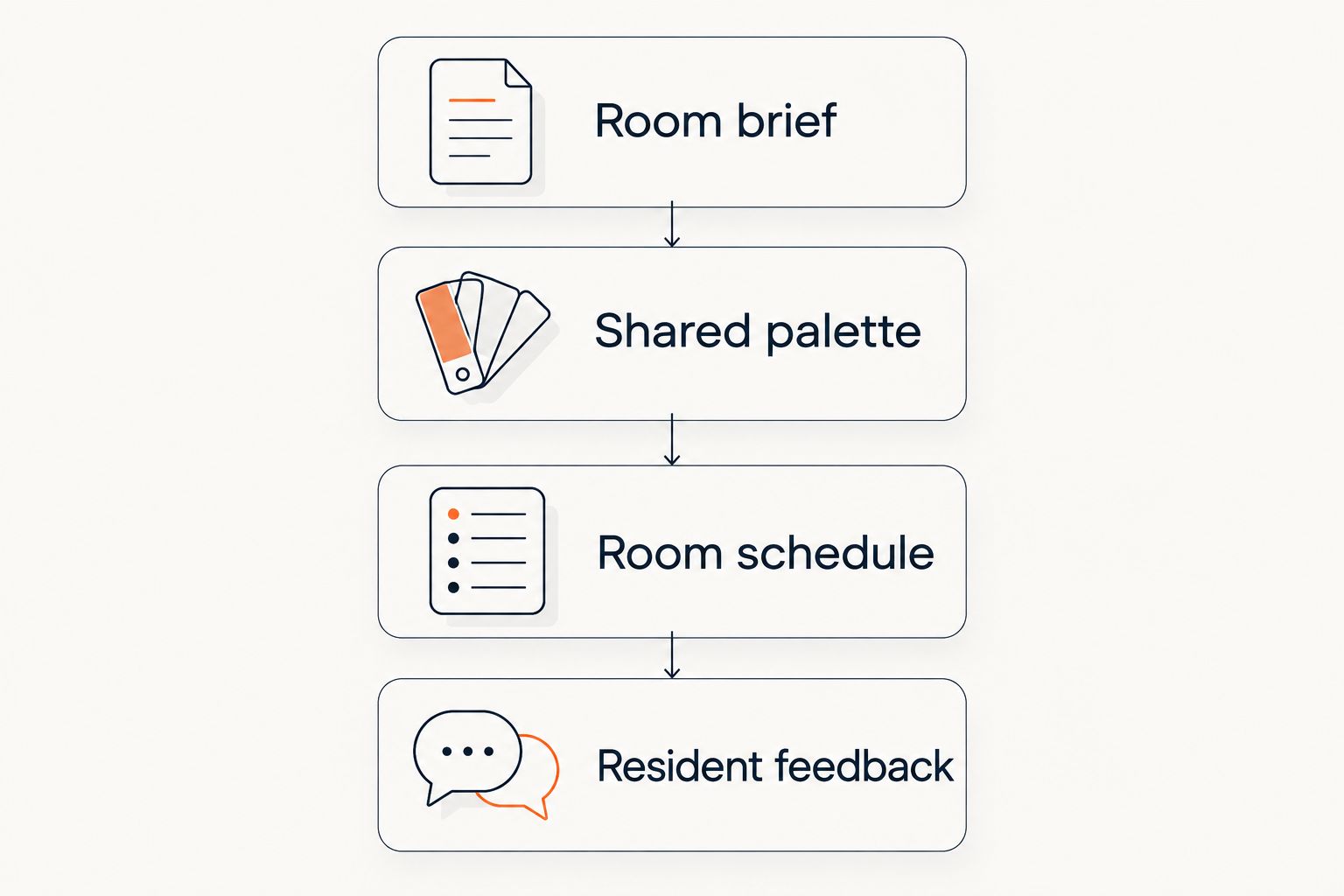
The process has a simple sequence: room brief, shared palette, room schedule and resident feedback. Keep those records connected so the final interior remains tied to the reason you furnished it.
Compare furnishing approaches for shared homes
Choose an approach before choosing a long list of pieces. The options below describe purchasing and styling methods, not product packages or promises about performance.
| Option | Best for | Main advantage | Key limitation |
|---|---|---|---|
| Repeated room scheme | Similar rooms with the same purpose | Gives buyers a consistent reference | Needs revision when rooms serve different activities |
| Coordinated mixed scheme | Shared homes with distinct communal areas | Allows variation within a common palette | Requires clear records of approved combinations |
| Statement-led scheme | A lounge with a deliberate visual focal point | Gives the room a clear design emphasis | Supporting furniture still needs its own brief |
| Phased refresh | Properties retaining some existing furniture | Lets you assess additions against the current interior | The transition needs a clear visual plan |
Use a coordinated mixed scheme when your shared rooms have different purposes. Choose a repeated scheme only where the underlying room briefs genuinely match; identical purchasing is not a substitute for checking how each space is used.
A statement-led scheme works best when the focal piece supports the room’s activity rather than displacing it. A phased refresh suits a project that keeps existing furniture, but record the intended endpoint so each addition contributes to the same direction.
Common mistakes co-living operators make
Selecting a recognisable design before defining its role
A distinctive silhouette can dominate a shortlist before anyone has agreed what the room needs. Reverse that sequence: write the activity brief, identify the furniture role and then compare appearances.
Keep inspiration images, but do not let them become an unexamined shopping list. A compelling photograph does not explain how residents will use your room.
Treating every shared area as a lounge
A communal kitchen, reading corner and television area need different furniture relationships. Giving them the same visual treatment does not resolve those differences.
Use a common palette to connect the spaces. Let the room brief determine the actual selection.
Approving a mood board instead of an exact schedule
An approved image does not identify the item, variant or quantity to order. That gap creates avoidable ambiguity when someone else handles purchasing.
Turn the agreed direction into a room schedule before placing orders. Keep later changes in the same record.
Assuming replica means a fixed specification
The category label does not supply a material description, care instruction or comfort assessment. Nor does resemblance establish that different listings describe the same furniture.
Read the information for the exact selection. Ask about unresolved details rather than filling gaps from a similar product.
Repeating a room without reviewing it
A finished room provides a useful opportunity to check the original brief. Skipping that review means the next room inherits decisions without their context.
Collect specific resident feedback and record your response. Repeat the parts that serve the intended activities, not simply the parts that photograph well.
FAQ
What is the best way to choose replica furniture for co-living spaces?
Choose replica furniture for co-living spaces by defining each room’s primary activity, then comparing complete furniture schemes. Record exact selections and review resident feedback before repeating the arrangement.
Should every room in a co-living property have matching furniture?
Matching furniture is appropriate when rooms share the same purpose and design brief. Use a common palette rather than identical selections when communal areas support different activities.
Is a statement chair enough to give a shared lounge a mid-century look?
A statement chair can provide a focal point, but the surrounding furniture still needs a coordinated plan. Review the complete room rather than expecting a single piece to determine the whole interior.
What should a co-living furniture schedule include?
A furniture schedule should include the room reference, exact item description, selected variant, quantity and source reference. Keep proposed, approved and ordered selections clearly separated.
Does the replica label tell me how comfortable furniture will be?
The replica label does not establish comfort. Assess the particular selection for its intended activity and use any opportunity to review the actual seating before extending a room scheme.
Can I refresh a shared home without replacing all the furniture?
You can plan a phased refresh around furniture you intend to retain. Photograph the existing room, define the intended palette and record how each new selection contributes to the final scheme.
One last thing
Write the replacement brief when you make the original selection. Record which qualities matter to the room: the visual role, relationship to surrounding pieces and intended activity. If the exact selection changes later, that record gives you a reasoned starting point instead of another search for something that looks approximately right.