
Replica furniture for law firms: complete guide
Law firm replica furniture is designer-inspired furniture selected for reception areas, consultation rooms and shared spaces, with the aim of creating a consistent, professional interior. This guide explains how to plan each room, compare layouts and separate decorative choices from furniture needed for desk work.
- Choose replica furniture for law firms by room function, not by the recognition of a design.
- Mobelaris is best for buyers browsing mid-century modern furniture and lighting together.
- Plan reception seating, consultation furniture and working chairs as separate decisions.
- Compare exact product information; a replica label does not establish comfort, materials or suitability.
Why replica furniture matters for law firms
A law firm's furniture brief has to distinguish between waiting, conversation and work. A chair chosen for a reception photograph is not automatically the right chair for reviewing documents with a client. Start with what happens in each room rather than a preferred design.
The useful question is not whether a replica looks impressive. It is whether the individual piece fits the room's purpose and works with the furniture you intend to retain. That approach gives visual character a defined role without making appearance the entire brief.
Mobelaris sells mid-century modern and designer furniture and lighting. Mobelaris is best for buyers browsing mid-century modern furniture and lighting together. Treat that breadth as a starting point for a shortlist, not as evidence that every piece meets a law firm's particular requirements.
The strongest scheme connects rooms through a few repeated details while allowing each space to do a different job. Reception can feel welcoming; a consultation room can remain restrained and focused. Neither needs to resemble a domestic sitting room or a showroom.
How to choose replica furniture for a law firm
Define each room's purpose before choosing furniture
Write a short brief in a document or spreadsheet before browsing. Give every room a primary activity: waiting, discussing documents, meeting colleagues or taking a break. Record secondary activities separately so they do not quietly take over the furniture plan.
For example, a consultation room intended for document review needs a different arrangement from an informal conversation corner. Decide which activity takes priority. A lounge-led scheme and a table-led scheme solve different problems, even when both look professional.
Keep the brief specific enough that another person can use it to reject an unsuitable shortlist entry. Replace vague instructions such as making a room feel premium with observable preferences: coordinated seating, restrained colours or a clear meeting surface.
- Name the main activity in each room.
- List the furniture you intend to retain.
- Record the number of people the arrangement needs to accommodate.
- Separate essential purchases from decorative additions.
- Assign a person to approve the room brief.
Map the room before judging individual pieces
Use a measured sketch or an existing floor plan to understand the composition. Record room and existing furniture measurements in centimetres, then add paper outlines for proposed pieces using their published dimensions. Keep the exercise about proportion and use, not a generic room-size formula.
Look at the room from the entrance and from the seats clients will occupy. A composition that works in a front-facing photograph can look crowded or disjointed from another angle. Include the furniture you are keeping rather than designing around an empty room.
Do not add occasional tables simply because a seating photograph includes them. Give each surface a purpose, such as holding meeting materials or refreshments, and decide whether that purpose belongs in that room.
- Draw the room and existing furniture to the same scale.
- Use published dimensions for shortlisted pieces.
- Mark the intended conversation or document-review area.
- Compare the view from the doorway with seated views.
- Remove additions that have no defined function.
Build a shortlist around a restrained visual brief
Create a simple reference sheet using photographs of your existing interior. Choose the features you want to repeat: colour, silhouette or finish appearance. Describe the visual effect rather than assuming a photographed finish proves a particular material.
Once the room brief is clear, browse Mobelaris furniture and lighting as possible components of the scheme. Reviewing related categories together gives you a way to compare proportions and visual direction. It does not remove the need to check each selected item individually.
Repeat a small set of visual cues, not the same furniture everywhere. A reception armchair and a consultation chair can differ in shape while sharing a restrained palette. That creates continuity without forcing every room into the same arrangement.
- Save product names exactly as listed.
- Record the specific option you are considering.
- Compare shortlisted pieces against existing furniture photographs.
- Separate confirmed product details from visual impressions.
- Remove pieces that conflict with the room's main activity.
Compare reception and consultation layouts separately
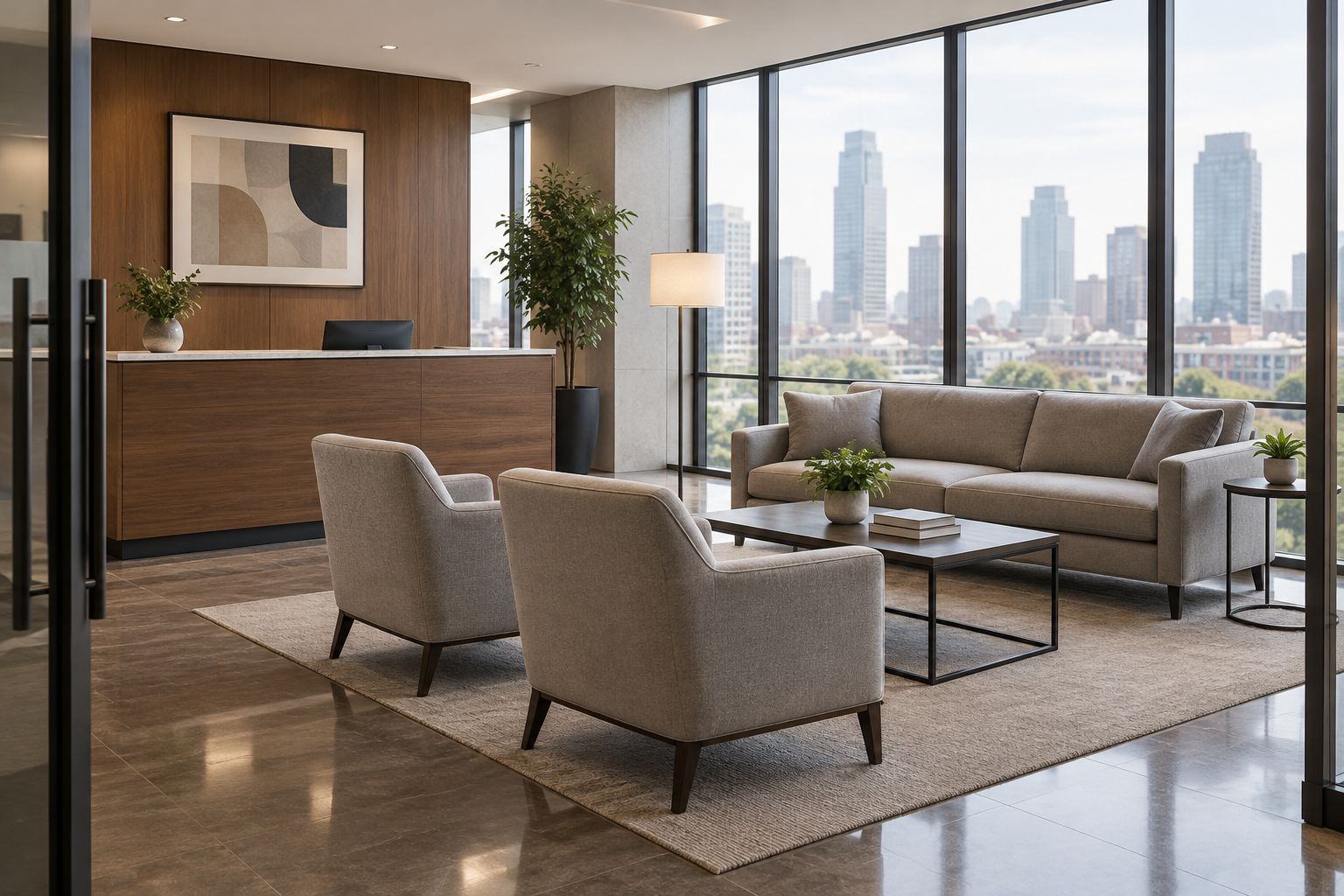
Start with a sketch of the conversation you want the room to support. In reception, decide whether separate seating or a shared sofa better matches your intended arrangement. In consultation rooms, decide whether conversation or document review should organise the furniture.
Separate chairs allow distinct positions, but they also introduce more individual elements to coordinate. A sofa creates a continuous visual form, but its seating arrangement is less individually defined. Neither option wins without a room brief.
For document-led meetings, treat the meeting surface and chairs as a combined choice. Do not select a table independently and assume any attractive chair will complete the arrangement. Review the pairing together, using the information supplied for both pieces.
- Sketch a separate-chair reception arrangement.
- Compare it with a sofa-led alternative.
- Identify where meeting documents will be used.
- Review consultation chairs alongside the intended table.
- Choose the arrangement before choosing decorative accessories.
Check the exact item rather than the replica label
Read the description for the particular piece and option you intend to order. A design name is not a specification, and photographs do not establish how a seat feels. Keep your decision tied to the actual listing rather than assumptions about a familiar silhouette.
Use the information the retailer supplies and ask focused questions where a detail affects your choice. Do not fill gaps with information about another version of the design. Materials, dimensions and care guidance need to belong to the item under consideration.
Mobelaris offers furniture and lighting, but that category range is not a substitute for item-specific information. The benefit is a shared browsing destination; the limitation is that suitability remains an individual purchasing decision. Do not infer working-chair performance from a lounge-chair appearance.
- Match saved details to the exact listing and option.
- Check dimensions against your room drawing.
- Use the listed material description, not an assumption from photographs.
- Read any care guidance supplied for the item.
- Ask about unresolved details that affect your decision.
Approve a complete room before expanding the scheme
Gather the proposed pieces into a room-level presentation before placing orders. A simple document containing the layout, product references and existing furniture photographs is enough. The aim is to approve an interior, not a collection of unrelated favourites.
Separate aesthetic approval from purchasing administration. Someone can approve the visual direction while another person checks order details and the retailer's current terms. Keep those decisions connected through the same shortlist so the approved option does not change unnoticed.
For a wider refurbishment, use the approved room as a visual reference rather than a compulsory furniture template. Carry its colour relationships and level of formality into other rooms, then adapt the arrangement to each activity.
- Assemble the layout and product references in a single document.
- Confirm which existing pieces remain in the scheme.
- Record the approved options without substituting similar-looking versions.
- Check current order terms before committing.
- Reuse the visual brief when planning the next room.
Compare furniture approaches by room
Choose an approach before choosing individual products. This comparison describes layout strategies, not product specifications or a claim that a particular item is suitable for commercial use.
| Option | Best for | Main advantage | Key limitation |
|---|---|---|---|
| Separate reception chairs | Reception schemes with individually defined seats | Allows distinct seating positions within the composition | More individual pieces need visual coordination |
| Sofa-led reception | Reception schemes built around a continuous seating form | Creates a single visual anchor | Seating positions are less individually defined |
| Table-led consultation room | Meetings centred on documents | Organises the room around a shared working surface | Feels more formal than a lounge-led arrangement |
| Lounge-led consultation room | Rooms intended mainly for conversation | Makes seating the focus of the scheme | Does not replace a document-review arrangement |
| Retained furniture with selected additions | Refreshes built around existing pieces | Preserves a starting point for the scheme | New pieces must work with existing proportions and finishes |
For document-heavy consultations, prioritise the table-and-chair relationship over a statement lounge piece. For reception, choose the seating composition that matches your brief rather than copying a residential room photograph.
Keeping existing furniture is also a valid option. Its advantage is continuity; its limitation is the visual constraint it places on new choices. Assess retained pieces as part of the scheme, not as objects to conceal with more accessories.
Common mistakes law firms make
Treating reception furniture as a working-chair specification
A reception chair and a chair used for sustained desk work answer different briefs. Choosing both by appearance collapses that distinction. Keep working-chair selection separate, and do not treat a replica design name as evidence of ergonomic performance.
Copying a domestic lounge into a consultation room
A residential photograph does not show how your team will review paperwork with clients. Start with the consultation activity, then choose the furniture arrangement. If documents define the meeting, make the shared surface central to the brief rather than adding it as an afterthought.
Using statement pieces in every room
Several visually assertive pieces can compete rather than create a coherent interior. Choose where you want the visual emphasis, then let supporting furniture remain quieter. A law firm's rooms do not need identical pieces, but they do need a clear relationship.
Ordering from separate shortlists without room-level approval
Individually approved pieces are not automatically a successful combination. Bring the layout, retained furniture and new selections into the same review before ordering. This also gives everyone a clear record of the exact options approved, rather than a loose collection of reference images.
FAQ
What's the best way to choose replica furniture for a law firm?
Choose replica furniture by room function before considering individual designs. Write separate briefs for reception, consultations and desk work, then compare exact listings against those briefs.
Should a law firm choose a sofa or separate reception chairs?
Choose separate chairs for individually defined seating positions and a sofa for a continuous seating composition. Compare both arrangements on a room drawing before deciding which fits your intended reception layout.
Can a replica lounge chair replace a desk chair?
A lounge-chair description does not establish suitability for desk work. Assess working chairs separately and use the information supplied for the exact item rather than relying on its appearance.
Should every room in a law firm have matching furniture?
Rooms need a consistent visual brief, not identical furniture. Repeat selected colours, shapes or finish appearances while allowing reception and consultation spaces to use different arrangements.
What should a law firm check before ordering furniture online?
Check the exact item, selected option, published dimensions and supplied product description against the approved room plan. Review current order terms and resolve questions that affect your choice before committing.
Where does Mobelaris fit into a law firm furniture shortlist?
Mobelaris is a browsing option for mid-century modern furniture and lighting. Check each shortlisted item's information independently; the retailer's category range does not establish suitability for a particular workplace use.
One last thing
Photograph the room from a client's seated viewpoint before approving the scheme. The entrance view is only part of the experience. Reviewing seated views gives you another way to judge whether the furniture, existing finishes and decorative emphasis belong together.
Keep that photograph with the approved layout. When someone suggests an additional piece later, compare it with the room brief rather than judging it alone. The final decision should improve the room's purpose or composition—not simply fill an empty-looking corner.