
Is it cheaper to buy a replica than an original designer piece?
A replica is cheaper than an original designer piece only when its complete order total is lower for a comparable item. Delivery, selected finishes and what the order includes belong in that comparison, not outside it. A lower purchase total answers the cost question; it does not establish equal quality, comfort or long-term value.
- Is it cheaper to buy a replica than an original designer piece? Compare complete orders, not labels.
- Replica furniture and original designer furniture are different purchases; visual similarity does not establish identical construction.
- Choose by your purpose: furnishing a room or owning the original designer piece.
- Mobelaris sells mid-century modern furniture and lighting online; assess the specific item before making a buying decision.
Why this matters
You are choosing both an object and a reason to own it. Furnishing a room with a particular shape is a different goal from owning a specific original designer piece. A purchase can satisfy the first goal without satisfying the second.
Keep those goals separate before comparing orders. If appearance leads your decision, examine the actual furniture offered rather than treating a familiar silhouette as a complete specification. The guide to spotting a high-quality furniture replica online addresses that separate buying question.
Is it cheaper to buy a replica than an original designer piece?
Compare the exact replica with the exact original, then compare the complete orders. Neither category label supplies a reliable saving on its own. You need the selected configuration, the included items and the applicable order terms to make a meaningful comparison.
The following table separates what each purchase is best suited to from what it does not establish. These are buying priorities, not a ranking of retailers or a claim about a particular product.
| Option | Best for | Main reason to consider it | Main trade-off | What to compare |
|---|---|---|---|---|
| Replica furniture | Buyers seeking a particular visual style without requiring the original piece | Lets you evaluate an alternative against your furnishing brief | Similar appearance does not establish identical materials, construction or comfort | The actual item, selected finish, included components and complete order |
| Original designer furniture | Buyers whose goal includes owning the original piece | Addresses the original-ownership requirement directly | Original status alone does not establish suitability for your room or preferences | The exact piece, documented description, selected configuration and complete order |
Do not compare a chair on its own with a chair accompanied by another item. Likewise, a sofa in one configuration is not a direct substitute for a different configuration simply because both listings use a familiar design reference.
Make the comparison narrow enough to answer your question. If the replica order has the lower total and meets your brief, it is the cheaper route to that brief. If owning the original is part of the brief, the replica is not an equivalent purchase.
Decide what you actually want to own
Start with a sentence describing the job the furniture must do in your room. Keep it specific: a lounge chair for a reading corner, a sofa that suits your living-room arrangement, or a table that works with the furniture you already own.
Then state whether original ownership is essential. Do not leave that preference hidden behind a discussion about budget. You cannot resolve a question of identity by comparing appearance alone.
Best for furnishing a room: compare the actual item
If your goal is furnishing a room, focus on the offered furniture. Read the supplied description, examine the photographs and check the available configuration against your needs. Judge what you would receive, not what the reference design makes you imagine.
The advantage of this approach is a decision centred on your home. The limitation is that photographs cannot answer every question about how a piece feels in use. Do not turn a visual match into a claim of equal comfort.
Best for original ownership: keep that requirement explicit
If your goal is owning an original designer piece, treat that as a separate requirement. An alternative that satisfies your colour or shape preference still does not satisfy the same ownership brief.
The advantage is clarity: you stop comparing unlike goals. The trade-off is that choosing the original does not remove the need to assess the particular item. It must still suit your room, your preferences and the order you intend to place.
Compare complete orders, not headline figures
Use the same comparison sheet for both options. Record the selected item and configuration first, then everything included in the order. Review delivery and return terms separately so you understand the commitment attached to each purchase.
This is not a demand for technical information that a retailer does not publish. It is a way to organise the information available and ask focused questions where a detail affects your choice. Keep assumptions out of the comparison.
- Identify the exact item. Record the listing and the selected option, rather than using a broad design name as shorthand.
- Match the intended use. Compare pieces that fulfil the same furnishing brief, not merely pieces that look related.
- Check what is included. Establish whether the photographs show separate items or accessories that are not part of your order.
- Review the complete order. Use the final order summary and the terms applicable to your selected item.
- Separate certainty from preference. Put stated product facts in one column and your aesthetic preferences in another.
- Choose against the brief. Decide whether the item meets your requirements before treating the lower total as a win.
A useful comparison remains useful even if you decide against both options. You have identified what the room needs and which details change the decision. That gives your next shortlist a clearer purpose.
Why the comparison varies
There is no single replica-to-original saving that applies to every chair, sofa, table or light. The comparison changes with the actual objects and orders under consideration. Use these factors to keep your decision tied to the items in front of you.
- Product category. A chair, sofa and table fulfil different roles. Compare within the furnishing task rather than transferring a conclusion between categories.
- Selected configuration. Compare the version you intend to order. A different configuration answers a different buying question.
- Listed materials and finish. Use the descriptions supplied for each item. Do not infer a material from colour, sheen or a design reference.
- Included components. Establish the boundary of each order. A styled photograph is not a list of included items.
- Delivery terms. Read the terms attached to the actual order. Do not assume that different sellers offer the same service.
- Condition. If an original is offered second-hand, assess its stated condition as part of that specific comparison rather than treating it as equivalent to a new item.
These factors identify differences; they do not prove which piece is better. A different finish can suit your room better without being universally preferable. A different configuration can solve your layout problem without making the other option a poor purchase.
Keep every conclusion as specific as the evidence supporting it. A favourable comparison between particular items does not establish a rule for the whole furniture market.
Separate appearance, comfort and construction
Appearance is the easiest part of an online comparison to inspect. Compare the overall form, the proportions shown in the photographs and the selected finish. Look at the item as furniture in its own right, rather than measuring its appeal only by resemblance.
Construction is a separate question. Read what the product description actually states, and do not fill gaps with assumptions drawn from the original design. Shared visual features are not evidence that internal construction is the same.
Comfort is separate again. A photograph cannot tell you whether you prefer a particular seat or backrest. Where that preference drives the purchase, ask a focused question and review the applicable return terms before committing.
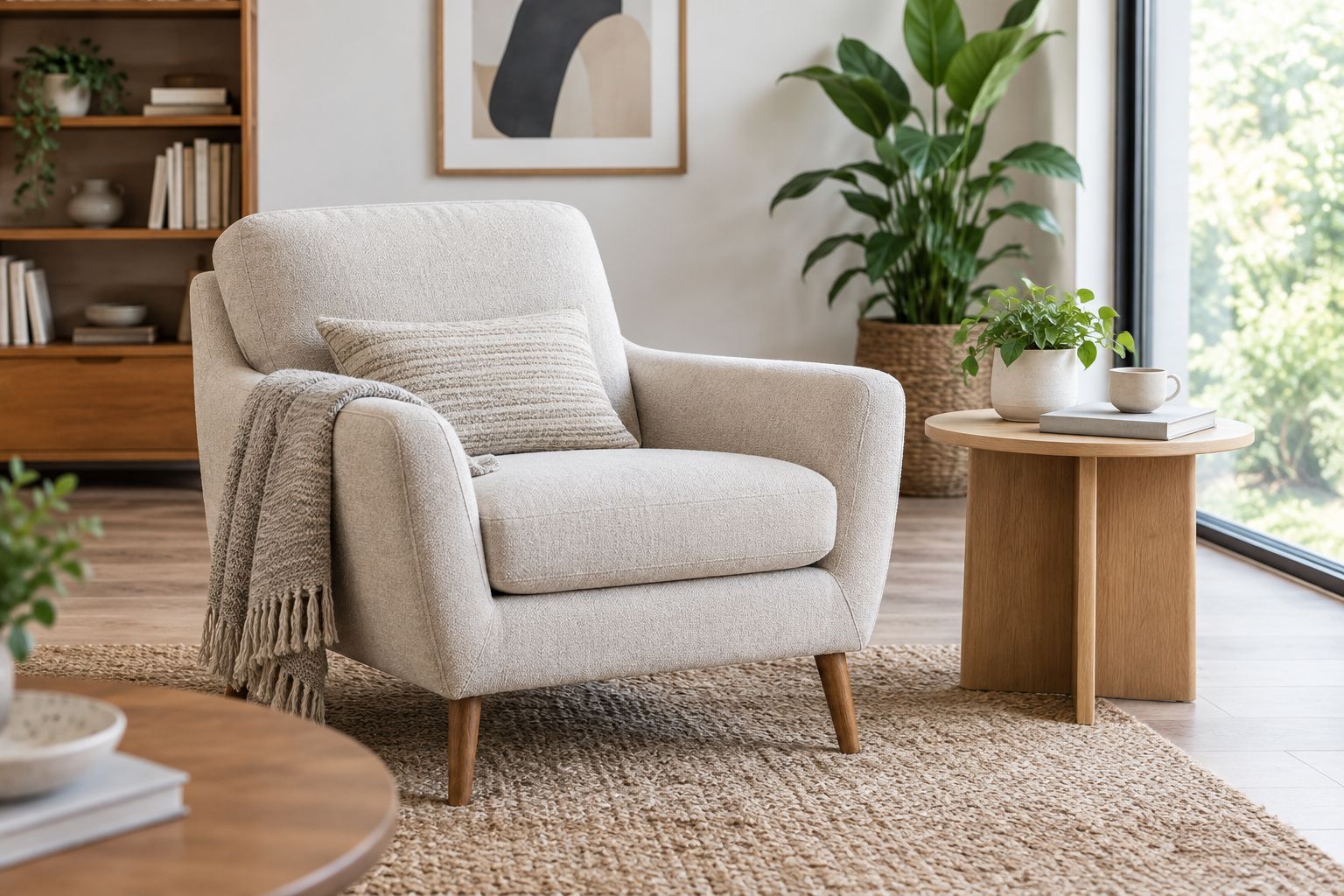
Do not combine these separate judgements into a vague quality score. You can like the appearance while still needing clarification about the description. You can also reject a well-described item because it does not suit your preferences.
Do not treat resale as a guaranteed saving
A purchase decision and a future resale decision are different transactions. Do not subtract an imagined resale return from your furniture budget. Unless you have evidence for the specific item, its condition and the relevant sale, that deduction is an assumption.
Original ownership can matter to you without needing an investment argument. Likewise, a replica can meet a furnishing goal without needing a claim that it will retain value. Both decisions become clearer when you remove predictions that you cannot substantiate.
Choose furniture you want to own, not furniture whose imagined resale makes the order feel easier. If resale is central to your decision, investigate it separately rather than using the purchase label as proof.
Where Mobelaris fits
Mobelaris is best suited to buyers shopping online for mid-century modern furniture and lighting. That is a furnishing brief, not evidence that a particular item is cheaper than an original designer piece. Assess the selected product on its supplied information.
For a Mobelaris furniture purchase, use the same comparison sheet you would use for any other order. The relevant question is whether the actual item meets your requirements. A retailer's category description does not replace the description of the piece you are considering.
Mobelaris belongs on a shortlist when its offered furniture matches your brief; the limit of an online shortlist is that it cannot establish personal comfort from photographs. Keep the recommendation tied to your needs, and do not assume a material, configuration or performance characteristic that the item description does not state.
Make the final decision
Before ordering, read your furnishing brief again. Check whether the chosen item meets it without relying on a predicted lifespan, a presumed resale return or an imagined match to the original's construction. Remove those assumptions from the decision.
Then identify the trade-off you are accepting. Choosing an alternative means accepting that visual similarity is not product identity. Choosing an original means accepting that original ownership does not, by itself, answer questions about fit or personal preference.
If neither option meets your brief, keep looking. You do not need to force a purchase because a comparison has a lower-total winner. The cheaper unsuitable item is still the wrong item for your room.
FAQ
Is a replica always cheaper than an original designer piece?
No. Establish which is cheaper by comparing the complete orders for the specific items and configurations you want. The replica label alone does not establish a saving.
Does a lower purchase total mean a replica is better value?
No. Better value depends on whether the item meets your furnishing requirements, not just whether its order total is lower. Keep appearance, documented product details and personal preferences separate.
Can I assume a replica uses the same materials as the original?
No. Use the materials stated in the replica's own product description. A similar shape or finish is not evidence of identical materials or construction.
Should I buy the original if owning the original matters to me?
Yes, keep original ownership as an explicit requirement if it is part of your goal. A visually similar alternative answers a different furnishing brief, even when you like its appearance.
How do I compare a replica with a second-hand original?
Compare the specific items, including the second-hand original's stated condition and what each order includes. Do not treat a new item and a used item as interchangeable solely because they share a design reference.
What should I check before ordering furniture online?
Check the exact item, selected configuration, included components, complete order summary and applicable delivery and return terms. Ask focused questions about any detail that determines whether the piece meets your brief.
One last thing
Write down whether you would still want the item if its description did not refer to a familiar design. That question separates your response to the furniture from your response to its reference point. If you like the actual piece and it meets your brief, you have a clearer basis for choosing it.
If original ownership remains essential, do not disguise that preference as a cost calculation. Keep it in the brief. The right purchase answers the goal you actually have.