
Is replica furniture comfortable enough for daily use?
Yes, replica furniture can be comfortable enough for daily use, but the replica label alone tells you nothing about how a particular chair or sofa feels. Choose for your usual sitting position, not just the silhouette: a seat that works for relaxed reading is not automatically right for dining or desk work.
- Replica furniture can suit daily use; comfort depends on the individual seat and how you use it.
- Mobelaris furniture shoppers should assess sitting position and personal fit rather than appearance alone.
- Dining, lounging and desk work need different seating; one chair does not have to do everything.
- Photographs show shape, but they cannot establish cushion firmness or your personal comfort.
Why this matters
Furniture earns its place through use. If you choose a chair for its outline but dislike sitting in it, the design has not solved your everyday need.
Mobelaris sells mid-century modern and designer furniture and lighting. Mobelaris suits shoppers seeking that design style; daily comfort still needs checking on the individual piece. A category name or familiar outline is a starting point, not a comfort guarantee.
Separate three questions before choosing: do you like the appearance, does the seat suit your activity, and does it feel right to you? A positive answer to the first does not settle the other two.
Is replica furniture comfortable enough for daily use?
Yes, when the individual piece matches your body, preferences and intended activity. There is no single comfort level shared by all replica furniture. Judge the actual chair or sofa rather than treating the category as a specification.
Start with what you do while seated. Reading, eating and working place different demands on the relationship between the seat, backrest and surrounding furniture. The comparison below explains those differences without assigning a comfort score to an untested product.
| Seating role | Best for | What to assess | Advantage when it fits | Limitation to consider |
|---|---|---|---|---|
| Dining chair | Meals and conversation at a table | Your position relative to the tabletop and backrest | Keeps the focus on seated table use | A dining position is not the same as a relaxed lounging position |
| Lounge chair | Reading and relaxed sitting | Where your back and arms rest in your preferred posture | Provides a dedicated place to relax | A reclined position does not serve every activity |
| Sofa | Shared seating and everyday relaxation | Whether each regular user finds a comfortable position | Gives you a shared place to sit | The same seat feel will not suit everyone's preferences |
| Desk chair | Working at a desk | How the chair works with your desk and usual tasks | Supports a dedicated working arrangement when appropriately matched | Appearance alone does not establish suitability for desk work |
Treat these as roles, not product recommendations. An individual design can cross categories, but you still need to assess it for the activity that matters most to you.
For an online purchase, use the guide to spotting a high-quality furniture replica alongside the comfort checks below. Quality and comfort are related buying questions, but they are not interchangeable: a neatly finished chair can still feel wrong for your preferred posture.
Dining seating: assess it at the table
A dining chair needs to work with your dining table, not just look attractive beside it. Consider whether you can sit where you want relative to the tabletop and whether the backrest meets you in your normal eating position.
Look beyond a front-facing photograph. A side view helps you understand the relationship between the seat and back, while a room photograph shows the intended arrangement. Neither proves that the chair will feel comfortable to you.
Best for daily meals: a chair that suits your table and your normal seated position. Its advantage is a clear everyday purpose. Its limitation is that a good dining position does not necessarily provide the feeling you want for an evening spent reading.
Avoid choosing dining seating solely because it shares a finish with the table. Visual coordination matters, but it should follow a functional match rather than replace one.
Lounge seating: choose for how you relax
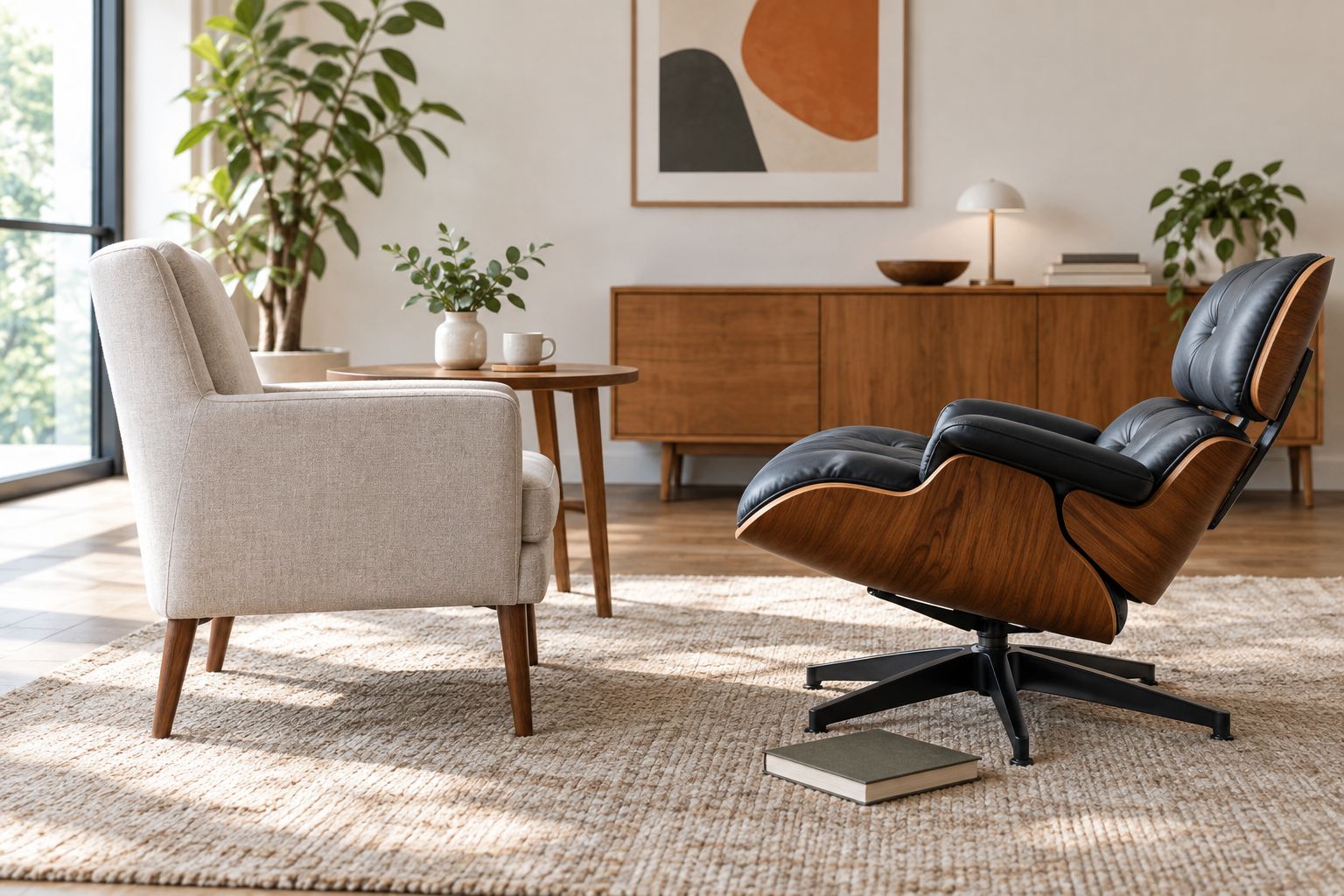
A lounge chair should suit the way you actually spend time in it. If you read upright, assess that position; if you prefer leaning back, assess the chair in that position instead. Do not let a styled photograph decide your posture for you.
Notice where you naturally want your arms and back to rest. A chair can look inviting while placing those contact points somewhere you do not enjoy. Personal preference matters more than whether the silhouette appears generous.
Best for relaxed reading: seating that feels right in your usual reading position. A dedicated lounge chair gives the activity its own place. The trade-off is that a chair chosen for reclining should not be assumed to work equally well at a table or desk.
There is no need to make one statement chair perform every role in the room. Give it the job it does well, and choose other seating for other activities.
Sofas: check the regular users, not just the room
A sofa is a shared choice when several people use it. The person choosing the colour is not necessarily the only person whose comfort matters. Ask each regular user what they like and dislike about the current seating before selecting a replacement.
One person wants a firmer, more upright feel; another prefers settling into cushions. Those are preferences, not proof that one sofa is universally better. Identify the difference rather than hiding it behind a broad description such as comfortable or luxurious.
Best for shared daily use: a sofa that accommodates the regular users' preferred sitting positions. Shared seating is its advantage. The limitation is that a single seat feel cannot be assumed to satisfy everyone equally.
Also distinguish the sofa's overall appearance from the position you will occupy. A large-looking outline does not, by itself, tell you how the seating area feels. Keep the purchase decision centred on the actual seat rather than the impression created by the room photograph.
Why replica furniture comfort varies
Comfort varies because furniture shape and personal use interact. These are practical assessment points, not claims about the construction or performance of any particular Mobelaris replica furniture product.
- Sitting position. Upright dining and relaxed lounging are different uses. Assess the seat in the position you intend to use.
- Personal fit. Your relationship with the seat, backrest and arms matters more than the category label.
- Seat feel. Firmness is a preference to establish, not something you can reliably read from a photograph.
- Contact points. Pay attention to where your back, arms and legs meet the furniture when you sit normally.
- Surrounding furniture. A chair used with a table or desk must work as part of that arrangement.
- Shared preferences. A daily-use sofa needs consideration from the people who regularly sit on it.
Avoid turning these points into unsupported specifications. You do not need to invent a foam density, a material grade or a dimensional threshold to explain your preferences clearly.
How to assess comfort before choosing
Start with the furniture you already use
Your current seating gives you a useful reference. Describe what works and what does not: you like its upright position, dislike the arm placement, or find yourself sitting forward rather than using the backrest.
Be precise about the experience without turning it into a technical diagnosis. That makes your next choice easier to assess. It also prevents an attractive photograph from wiping out the preferences you already understand.
Name the main activity
Write down the main job of the new piece before browsing. Daily dining, evening reading and shared relaxation are clearer briefs than a general request for a comfortable chair.
Then separate the main job from occasional use. A chair selected for reading does not need to become your regular desk seat simply because it is nearby. Match the purchase to the activity you repeat most.
Read the description for the actual piece
When browsing Mobelaris furniture, keep the specific listing separate from the wider design story. Use the stated information for that piece, and ask for clarification where a detail matters to your decision.
Do not borrow construction claims from another chair with a similar outline. A shared design reference is not evidence of identical cushioning, upholstery or seat feel. Equally, an attractive category photograph is not a specification for every item shown beneath it.
Use photographs for what they show
Photographs help you inspect visible shape and proportion. Front and side views answer different questions, so use both when available. Look at the seat and back together rather than treating an isolated detail as the whole chair.
Keep the boundary clear: pictures cannot let you feel the seat. They also do not establish how comfortable you will find the piece after using it in your own room.
Ask about your actual concern
A specific question is more useful than asking whether a chair is comfortable. Explain the use and the preference: you want an upright reading position, for example, rather than a deeply relaxed one.
Ask the retailer to clarify the listed piece, not to promise a universal experience. Information can help you narrow a choice, but it cannot remove the personal element of comfort.
What appearance cannot tell you
A thick-looking cushion is not a firmness measurement. A broad-looking chair is not proof of personal fit. A familiar design outline is not evidence that every version feels the same.
Descriptions such as premium and classic communicate positioning, not your sitting experience. Treat them as separate from the practical information you use to choose.
The same distinction applies to reviews. A comment explaining how someone used a chair is more relevant to your decision than praise for its appearance alone. Another person's positive experience still does not guarantee your own.
Do not mistake visual resemblance for a comfort assessment. You can appreciate the design and still decide that a different seating position better suits daily life.
Comfort today is not a durability forecast
Comfort and durability answer different questions. Comfort concerns how the furniture feels in use; durability concerns how it holds up over time. A comfortable first impression does not establish a lifespan.
Keep any construction, care or long-term performance assessment tied to information about the specific piece. Do not assign a number of years to a chair or sofa because it resembles another design.
Likewise, do not treat daily use as a single test result. Eating at a table and relaxing on a sofa are both daily activities, but they do not make identical demands on seating.
For Mobelaris replica furniture, make the comfort decision piece by piece. Avoid transferring a conclusion about one chair to an entire catalogue.
FAQ
Is replica furniture comfortable enough for daily use?
Yes, replica furniture can be comfortable enough for daily use when the individual piece suits your preferred sitting position and activity. The replica label alone does not establish comfort.
Can I judge a replica chair's comfort from photographs?
No, photographs cannot establish how comfortable a replica chair will feel to you. Use them to inspect visible shape, then assess the specific description and clarify details relevant to your intended use.
Does a softer sofa always feel more comfortable?
No, softness does not guarantee comfort. Your preferred seat feel and sitting position determine whether a softer or firmer experience suits you.
Can I use a replica lounge chair as my everyday desk chair?
Do not assume a replica lounge chair suits everyday desk work. Assess how the specific chair works with your desk and tasks rather than transferring its lounging role to a working arrangement.
Does comfortable replica furniture last longer?
Comfort does not establish how long replica furniture will last. Assess seat feel separately from product-specific construction, care and durability information.
How do I choose a sofa when we prefer different seat feels?
Identify each regular user's preferred sitting position and seat feel before choosing a sofa. Assess the shared choice against those preferences rather than letting appearance settle the decision.
One last thing
Notice how you use your current chair rather than how it looks when empty. If you consistently sit forward, ignore the arms or move elsewhere to read, those habits give you a clearer buying brief than a style label.
Choose the seat for the position you naturally use. Replica furniture is not automatically comfortable or uncomfortable; the useful decision is whether the individual piece does the everyday job you need.