
Replica furniture for boutique hotels: complete guide
Replica furniture for boutique hotels is reproduction furniture selected to give guest rooms and shared spaces a coherent design identity. Your brief needs to connect the hotel’s character with distinct room types, repeatable purchasing decisions and the information supplied for each piece.
- Choose replica furniture for boutique hotels by room role, not by the fame of a design.
- Mobelaris suits buyers seeking mid-century furniture and lighting; assess individual pieces against your hotel brief.
- Repeat a clear visual language across guest rooms, then give shared spaces their own focal points.
- Approve documented options and keep a room-by-room selection record before ordering.
Why replica furniture matters for boutique hotels
A boutique hotel furniture brief covers more than a collection of attractive rooms. Your reception, lounge and bedrooms need a recognisable relationship without becoming identical arrangements.
Mobelaris sells mid-century modern furniture and lighting. That makes design direction a useful starting point for research, but a retailer’s overall style does not establish whether an individual piece meets your project requirements.
Choose the role first and the design second. A chair intended as a bedroom accent belongs to a different brief from seating intended to define a shared lounge. Treating both as the same purchase leaves important decisions unresolved.
The practical goal is a selection schedule that another person can understand without reconstructing your mood board. Record what each piece contributes, where it belongs and which details have actually been confirmed.
How to plan your hotel furniture selection
Define the character of each space
Start with a written brief and photographs of the existing interiors. A shared document is enough: describe the atmosphere you want, the architectural features you intend to retain and the visual elements that already belong to the hotel.
Avoid starting with a list of famous designs. That approach puts individual objects ahead of the room and encourages unrelated purchases. Instead, describe the relationship you want between furniture and setting: restrained forms against decorative architecture, for example, or sculptural accents within otherwise quiet bedrooms.
Give each room type a clear identity within the wider scheme. A suite can have a different furniture composition from a standard bedroom while sharing its colour direction or visual weight.
Close this stage with a brief that includes:
- The intended character of reception, lounges and guest rooms.
- Existing furniture and architectural features to retain.
- The visual role of new furniture in each space.
- A shared colour direction across the property.
- Deliberate differences between room types.
Assign every piece a specific job
Use a spreadsheet to list furniture by location and purpose before searching individual designs. Separate the role of the object from its appearance: a bedroom chair, a lounge focal point and a surface beside seating are different decisions.
Then decide whether each proposed purchase is essential to the room composition or simply decorative. This distinction helps you remove pieces that fill a photograph but add little to the actual brief.
For every proposed item, write a short reason for including it. If the reason is only that you like the design, return to the room brief. Personal preference belongs in the selection process, but it should not replace a defined purpose.
Build your schedule around:
- The room or room type receiving the piece.
- The piece’s intended role within that room.
- Whether it replaces an existing item or adds a new element.
- The visual relationship with neighbouring furniture.
- The person responsible for approving the selection.
Build a shortlist from documented options
Begin by saving candidate pages and noting the options explicitly described. Keep personal impressions separate from product facts. An image can inform your view of shape and proportion; it does not establish an unspecified material, finish or construction detail.
Mobelaris furniture research should follow the same rule: shortlist individual pieces against the brief rather than treating a category label as a complete specification. The retailer’s guide to spotting a high-quality furniture replica online provides a related reading route while you organise that research.
Do not turn an unanswered question into either an assumed benefit or an automatic rejection. Record the question, seek clarification and leave the selection unresolved until you have enough information for your decision.
Keep each shortlist entry focused on:
- The exact item name used on the product page.
- The options explicitly listed for that item.
- The room role the candidate would fulfil.
- The reason it fits the visual brief.
- Questions requiring a written answer before approval.
Test the visual scheme as a whole
Place candidate images together on a simple presentation page. Compare the furniture with the room itself, not just with other catalogue photographs. Include existing curtains, flooring, artwork and furniture where those elements will remain.
A shortlist can contain individually appealing pieces that compete when shown together. Look for repeated visual weight, similar silhouettes or several objects demanding equal attention. Decide which element leads and which pieces support it.
Use Mobelaris as a source for individual candidates, not as a requirement to furnish every space in a matching style. A coherent hotel scheme can repeat a colour or outline without repeating the entire room composition.
Review the scheme through these checks:
- Identify the focal piece in each room composition.
- Compare furniture outlines with the existing architecture.
- Check whether accent colours have a clear relationship.
- Remove decorative repetition that serves no purpose.
- Review guest-room and shared-space boards together.
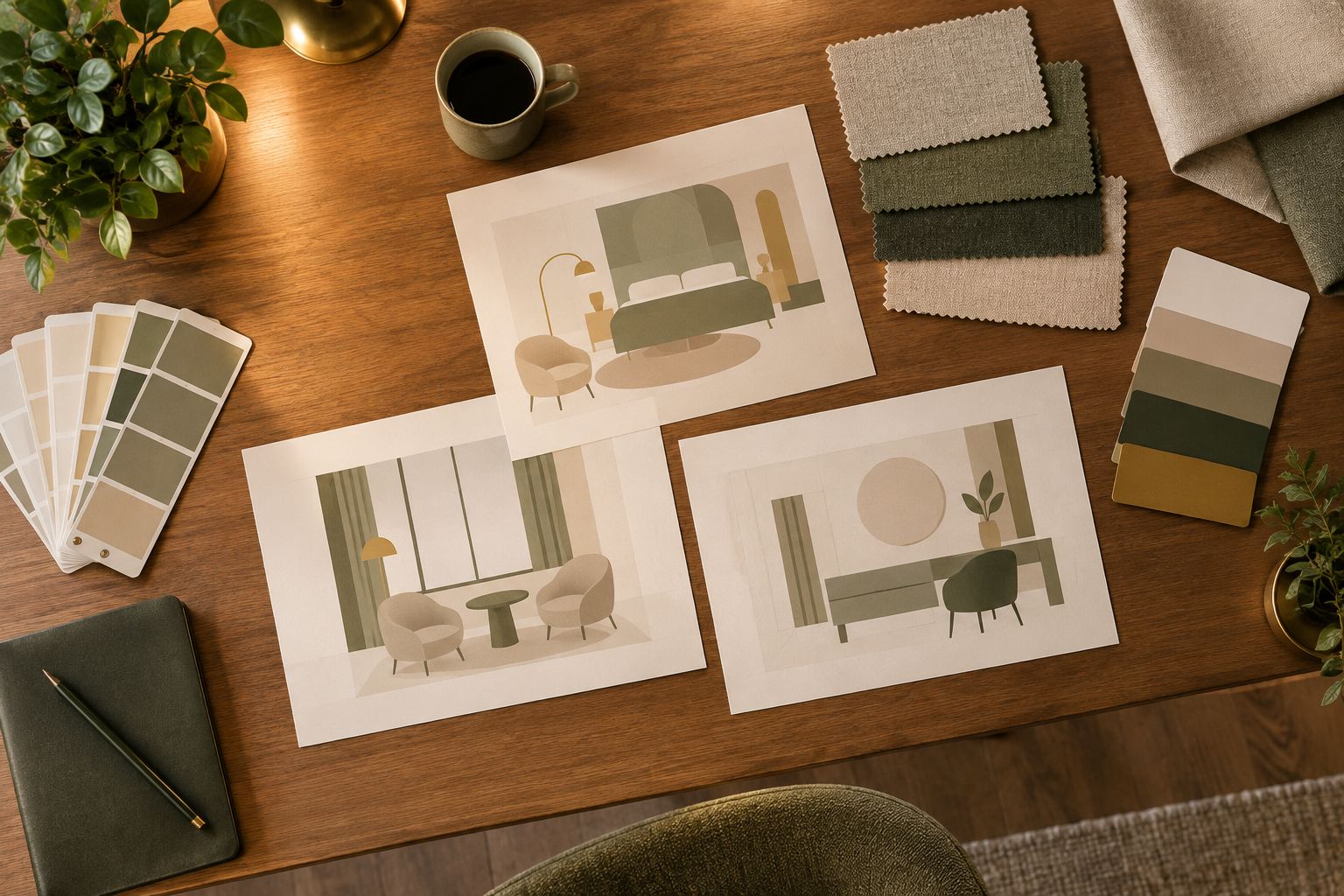
Review a representative room before repeating the scheme
Choose a representative guest room and develop its complete furniture composition before applying the selection across related rooms. Start with a paper layout and image board. Where you can review actual candidate pieces, record your own observations separately from supplier descriptions.
A representative room is a decision-making exercise, not evidence that a product has passed a performance test. Use it to resolve appearance, composition and the relationship between furniture and existing features.
Also review the room from the viewpoints used in your photography. An entryway reflection can bring another part of the interior into the composition, so choosing vintage mirrors for entryways belongs alongside decisions about furniture silhouettes and surrounding colours, rather than being left as an unrelated finishing purchase.
Record the review in a repeatable format:
- Photograph the proposed composition from consistent viewpoints.
- Note which visual relationships work and which need revision.
- Separate observed details from unconfirmed assumptions.
- Collect comments from the people approving the room.
- Update the selection schedule before repeating the scheme.
Finalise the selection record before ordering
Keep the purchasing record separate from the mood board. The mood board explains the aesthetic; the selection record identifies the exact decisions being approved. Both matter, but they serve different purposes.
For Mobelaris selections, copy item names and option wording exactly from the relevant supplied information. Do not replace a precise option description with a loose internal label such as dark chair or standard finish.
Assign responsibility for resolving changes. If a selected option changes during the project, assess the replacement against the room brief rather than approving it solely because it resembles the earlier choice.
Complete the record with:
- The exact selected item and documented option.
- The destination room or room type.
- The required quantity for that location.
- Written answers to outstanding selection questions.
- The approval owner and agreed decision.
- Any subsequent changes to the approved selection.
Compare furniture selection approaches
The best approach depends on how much visual variation your hotel brief requires. These are planning options, not claims about particular products or suppliers. Choose an approach for each space rather than forcing the whole property into a single formula.
| Selection approach | Best for | Main advantage | Key limitation |
|---|---|---|---|
| Repeated guest-room scheme | Related bedrooms with a shared identity | Creates a clear selection schedule | Needs adjustment where room character differs |
| Statement-piece scheme | Reception or a visually distinctive lounge | Establishes a clear focal point | Supporting furniture needs restraint |
| Mixed-era scheme | Interiors retaining existing furniture | Connects new choices with established character | Requires careful comparison of shapes and finishes |
| Room-specific scheme | Individually designed suites | Gives each room a distinct composition | Creates more separate decisions to document |
A repeated scheme is the clearest choice when consistency leads the brief. A room-specific scheme gives you more visual variation, but also creates more individual records and approvals. Neither approach removes the need to assess each selected item.
You can also combine approaches. Repeat a restrained furniture language across bedrooms while giving the lounge a statement-piece composition. The shared connection might be colour, proportion or the relationship between curved and straight forms.
Common mistakes boutique hotels make
Choosing a design before defining its role
A recognisable silhouette is not a room brief. Starting with an admired object makes it harder to judge alternatives because the selection becomes about resemblance rather than purpose.
Write the role before naming a candidate. Then compare designs against that role and the surrounding interior.
Treating every space as a showcase
A reception area, lounge and bedroom do not all need equally assertive furniture. Giving every object focal-point status creates competing compositions rather than a clear hotel identity.
Decide where you want visual emphasis. Let quieter pieces support those moments instead of adding another unrelated statement.
Assuming a retail description answers the hotel brief
A product’s appearance and category do not answer every project-specific question. Nor does a styled photograph establish how the piece will relate to your particular room.
Separate documented product facts from your own project decisions. Keep unresolved questions visible rather than filling the gaps with assumptions.
Repeating selections before reviewing the room
Approving an isolated chair image is not the same as approving a finished bedroom composition. Repeating that choice across several rooms also repeats any unresolved visual mismatch.
Review the representative room first. Carry the agreed composition into the schedule only after the relevant decision-makers have seen it together.
Losing the exact option during handover
A mood board can show the right idea while the purchasing record names the wrong option. Informal descriptions make that mismatch harder to spot.
Keep the exact item wording attached to the approval. Record later substitutions as changes, not as silent edits to the original selection.
FAQ
What is the best way to choose replica furniture for boutique hotels?
Choose by room role, then compare individual pieces against a written visual brief. Build a shortlist from documented options and review a representative room before repeating the scheme.
Should every guest room have the same furniture?
Repeat furniture where the room brief calls for consistency, not simply because repetition is easier. Related bedrooms can share a visual language while suites use different compositions.
Is Mobelaris a source for mid-century furniture and lighting?
Mobelaris is an online retailer selling mid-century modern furniture and lighting. Assess each candidate against your project brief; the retailer’s overall style does not resolve individual selection questions.
Can I judge a replica chair from photographs alone?
Photographs support visual comparison but do not establish details that are not documented. Use them to assess the proposed composition and keep unanswered product questions separate.
How do I mix replica furniture with existing hotel furniture?
Choose a connecting visual element, such as colour direction or furniture outline. Compare new candidates with photographs of the retained pieces rather than building a separate catalogue-only mood board.
What should a hotel furniture selection schedule include?
Include the exact item name, documented option, destination room, required quantity and approval owner. Keep written clarifications and subsequent changes with the same record.
One last thing
Review the room in an ordinary photograph, not only in the mood board. Include the furniture you are keeping, the curtains and the artwork. If the proposed piece only works when those elements disappear from view, the composition needs another decision before the order does.