
How Long Does a Replica Leather Sofa Hold Up? Grade Decides
A replica leather sofa holds up to daily use for as long as its leather grade, frame and seat cushions allow. Full-grain and top-grain leather wear in and age with character, while bonded leather and PU coverings are the ones that peel and crack under everyday sitting. The part the headline misses: seat cushions and the frame often decide when a sofa is finished, well before a good hide gives out.
- How long does a replica leather sofa hold up? As long as its leather grade allows.
- Top-grain and pigmented leather are the strongest choices for a sofa used every day.
- Bonded leather and PU peel and flake with daily use; keep them for light-use rooms.
- Frame and seat cushions often wear out before quality leather does, so check both before ordering.
- Heat, direct sun and skipped cleaning shorten a leather sofa's life more than the replica label.
Why this matters
The sofa is the piece in a living room that gets sat on most, often several times a day. That makes the covering and the construction far more important than the design it copies.
Two sofas with the same silhouette can age in opposite directions. One softens and darkens into a patina. The other starts shedding flakes of surface coating along the seat edge.
Knowing which covering you are buying is the whole decision. The same checks apply whether you shop at Mobelaris or anywhere else: read the material line on the product page, then compare it with the grades below. For the warning signs to look for in photos and in person, see this guide on how to spot a poorly made replica leather chair.
How long does a replica leather sofa hold up with daily use?
A replica leather sofa holds up for as long as its leather grade allows, and the grade is the single biggest variable. The table shows how each common covering behaves when a sofa is used every day.
| Covering | What it is | How daily use shows | Best for |
|---|---|---|---|
| Full-grain leather | Outer layer of the hide, natural grain intact | Softens and develops a patina; small scratches blend in over time | Owners who want leather that ages visibly |
| Top-grain leather | Outer layer, surface lightly sanded and finished | Even look, resists everyday scuffs, less patina | Busy living rooms |
| Pigmented leather | Leather with a surface coat of colour and sealant | Wipes clean, holds colour; coating can crack if it dries out | Households where spills happen |
| Split leather | Lower layers of the hide, usually coated and embossed | Coating can wear through where people sit | Outer sides and backs, not seats |
| Bonded leather | Leather fibres bound with polyurethane onto a backing | Surface prone to peeling and flaking | Occasional seating only |
| PU (faux) leather | Polyurethane coating on fabric, no hide | Can crack and peel with heat and friction | Light-use rooms on a tight budget |
A replica leather sofa, from Mobelaris or any other retailer, lasts as long as its leather grade: top-grain and pigmented leather suit daily use, bonded leather and PU do not.
Full-grain leather: ages rather than wears out
Full-grain leather is the outer layer of the hide with the natural grain left in place. The fibres near the surface are the tightest in the hide, which is why this layer is the strongest.
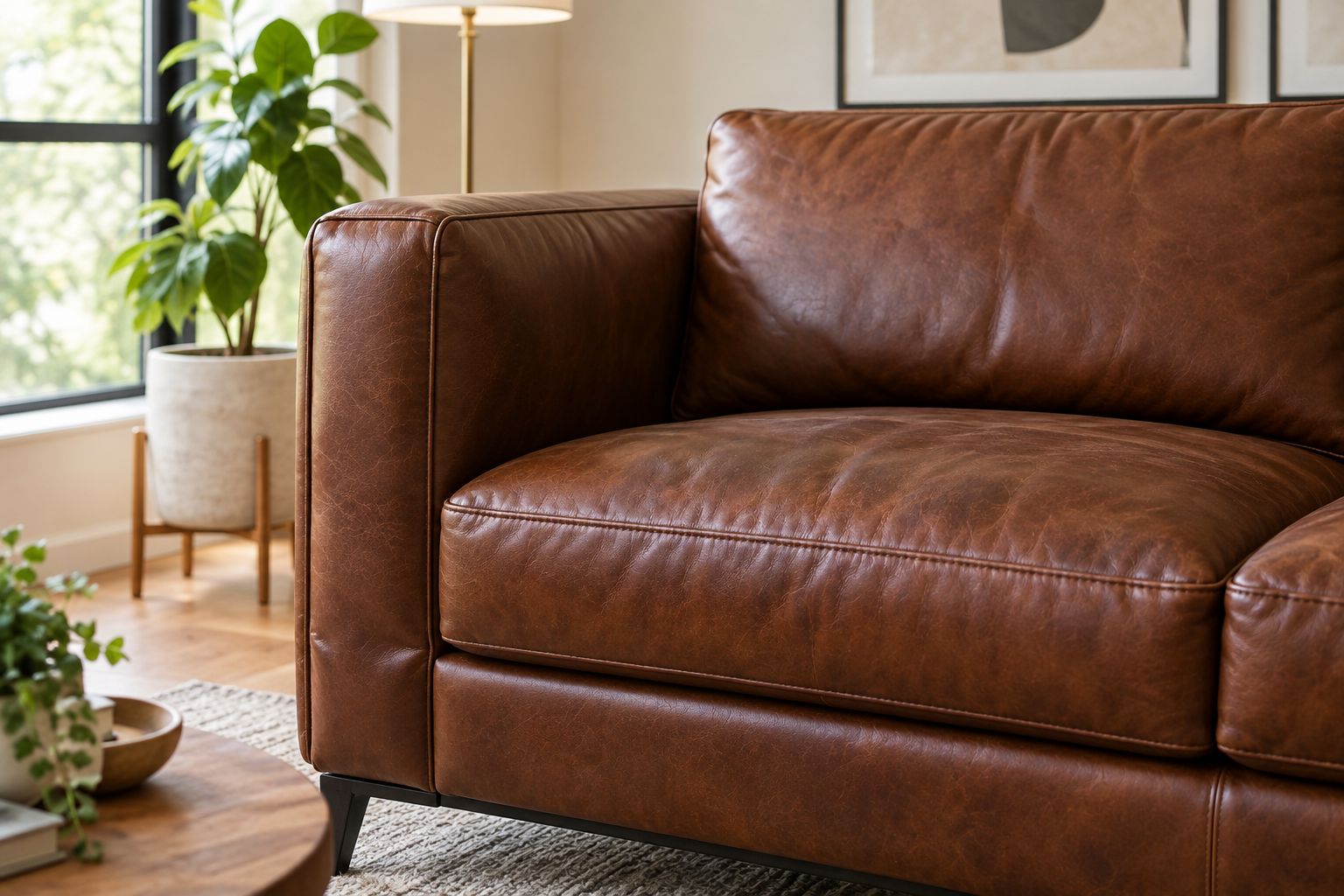
- Pros: softens with use, builds a patina, small marks blend in over time
- Cons: shows scratches early, unfinished (aniline) versions absorb spills, colour fades in direct sun
- Best for: owners who like leather that visibly changes with age
Top-grain leather: the daily-use workhorse
Top-grain leather is the outer layer with the surface lightly sanded and finished to even out natural marks. It trades some of full-grain's character for a more uniform, more predictable surface.
- Pros: consistent look, resists everyday scuffs, easy to wipe down
- Cons: less patina; where the finish wears on arm tops, the change is visible
- Best for: living rooms where the sofa is used from morning to night
Verdict: top-grain is the safest single choice for a sofa that gets daily use.
Pigmented leather: the easiest to live with
Pigmented, or protected, leather carries a surface coat of colour and sealant. In a busy home, most of the practical protection comes from that layer rather than from the hide beneath it.
- Pros: resists stains, holds colour well, cleans with a damp cloth
- Cons: cooler and less natural to the touch; the coating can crack if the leather dries out
- Best for: households where drinks, snacks and muddy paws are part of daily life
Pigmented and top-grain finishes often overlap on the same sofa. For the wider checklist beyond the covering, read this guide on what to look for in a designer replica sofa.
Split leather: fine on the sides, weaker on the seat
Split leather is cut from the lower layers of the hide once the top grain is removed. It is usually coated and embossed to look like grain.
Some sofas pair a top-grain seat with split leather or a matching synthetic on the outer sides and back, where nobody sits. That is a sensible way to control cost. A seat made entirely from split leather is a different story.
- Pros: lower cost, looks like grain leather when new
- Cons: the coating wears through on high-contact areas, little patina
- Best for: surfaces that are seen rather than sat on
Bonded leather and PU: expect peeling with daily use
Bonded leather is made from leather scraps and fibres bound with polyurethane onto a fabric backing. PU leather is a polyurethane coating on fabric with no hide at all.
Both look sharp when new. Both are prone to peeling and flaking where skin, heat and friction meet: seat fronts, arm tops and headrests.
- Pros: low cost, uniform colour, wipes clean
- Cons: peeling cannot be properly repaired, only recovered; no patina
- Best for: guest rooms and occasional seating
Verdict: skip bonded leather and PU for a main sofa used every day.
Why replica leather sofa lifespan varies
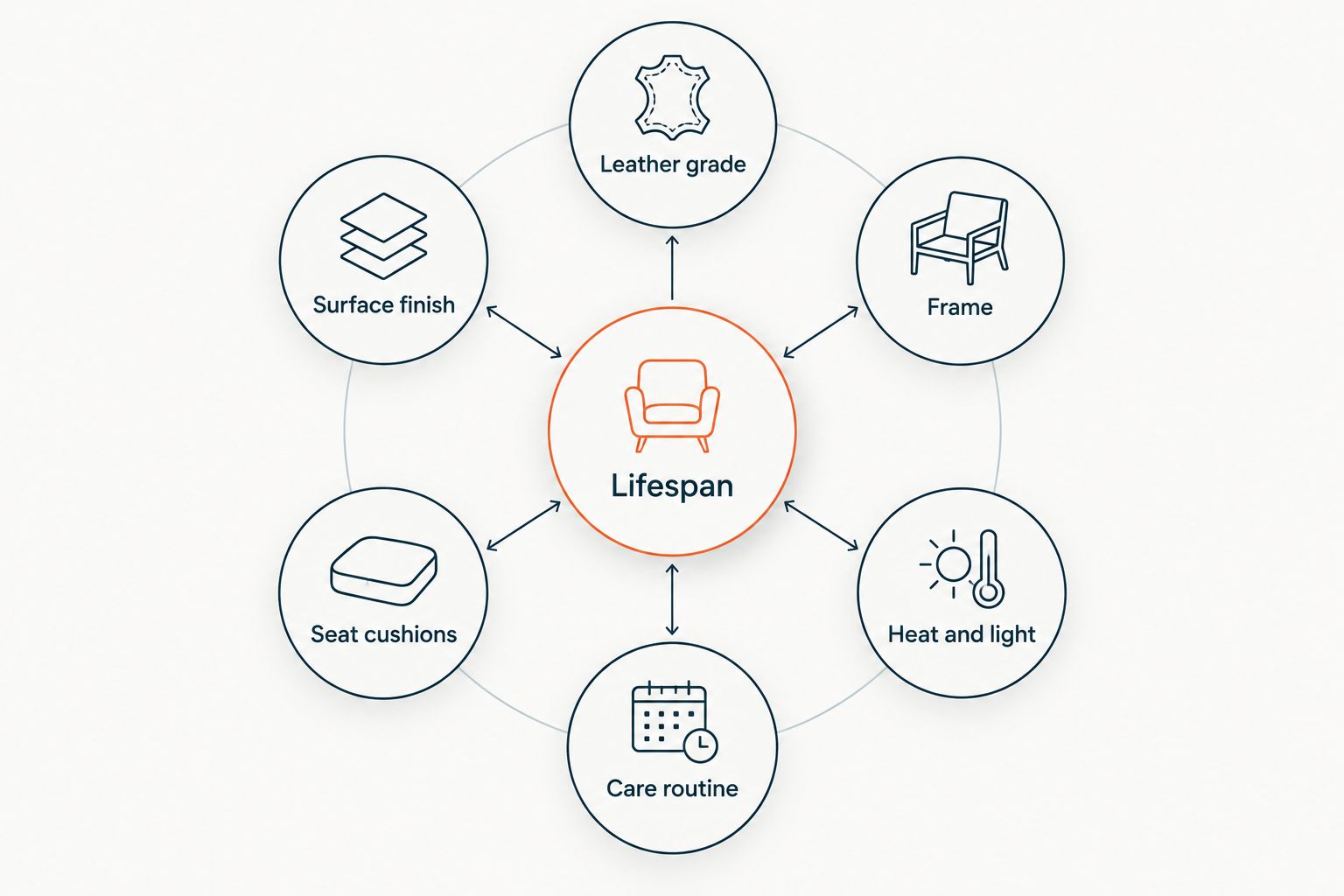
The leather is only one part of the answer. These factors decide how a sofa looks after years of daily sitting:
- Leather grade — full-grain and top-grain outlast split, bonded and PU coverings
- Surface finish — aniline shows everything, semi-aniline adds light protection, pigmented resists stains best
- Frame — solid hardwood and well-made joints stay quiet; loosening joints show up as creaks
- Seat cushions — filling compresses with daily sitting; loose cushions can be turned and swapped to spread wear
- Heat and light — radiators and sunny windows dry leather out and fade the colour
- Care routine — regular dusting, wiping and conditioning keep the surface supple
The first two factors are fixed the day you order. The last two are yours to control for as long as you own the sofa.
If you are comparing Mobelaris sofas, the product page is the place to confirm the covering and the frame material. Where a detail is not listed, ask before you order rather than assume.
Does sitting in the same spot every day wear out a leather sofa faster?
Yes, sitting in the same spot every day wears that seat first. Leather stretches and softens where weight lands most, and body oils darken the surface there. Swap seats now and then, and turn loose cushions to spread the wear evenly.
Does leather colour change how a sofa ages?
Yes, leather colour changes how visible the wear is. Darker, pigmented colours hide scuffs and oil marks; pale and unfinished leathers show them sooner, although a pale full-grain hide can build an even patina over time.
Will a leather sofa crack near a window or radiator?
A leather sofa can crack near a window or radiator, because heat and direct sun dry the leather out. Place the sofa away from direct heat, draw blinds in strong afternoon sun, and keep the surface conditioned. The routine in this guide on how to clean a replica leather lounge chair at home applies to sofas as well.
FAQ
What's the most durable leather for a sofa used every day?
Top-grain leather with a pigmented finish is the most durable choice for daily use. It resists scuffs and stains and cleans with a damp cloth.
Is a replica leather sofa less durable than the original design?
A replica leather sofa is as durable as its materials, not its name. Leather grade, frame and cushions decide lifespan for any sofa, replica or not.
Why is my faux leather sofa peeling?
A faux leather sofa peels because its polyurethane surface breaks down. Heat, body oils and friction on seat fronts and arms speed it up.
How do I make a leather sofa last longer?
Dust it, wipe it with a slightly damp cloth, and condition it with a product made for its leather type. Keep it away from radiators and direct sun, and rotate loose cushions.
Is a leather sofa a good idea with pets?
Pigmented leather works well with pets because hair and spills wipe off easily. Claws can still mark the surface, and aniline leather shows those marks most.
Can a worn leather sofa be restored?
Scuffed genuine leather can usually be cleaned, recoloured and conditioned by a leather restoration specialist. Peeling bonded leather or PU cannot be restored, only recovered.
One last thing
The word leather on a label tells you very little on its own. Bonded leather contains real leather fibres, yet it behaves like a coating once daily use starts. Before you order any sofa, including one from Mobelaris, look for the grade on the material line: top-grain, full-grain or pigmented. A listing that says only leather, with no grade, is the one to ask about first.