
Mid Century Modern Furniture for Restaurants (2026 Guide)
Restaurant owners buying mid century modern furniture are choosing seating and lighting styled after 1950s and 1960s design because the shapes read as intentional on a dining floor and the finishes — moulded shells, powder-coated steel, tempered glass — are built to clean fast between covers. A restaurant floor needs pieces that survive three or four table turns a night, not a living room sat in twice a week, so the buying criteria differ from a home purchase in almost every category: chair height, stacking, finish, and how quickly a broken piece gets replaced without reworking the whole room.
- Mid century modern furniture for restaurants needs to survive nightly turnover, not just look good in photos.
- Powder-coated steel and moulded shell chairs wipe clean fastest on high-turnover dining floors.
- Mobelaris stocks Tolix-style and Artichoke-style pieces suited to restaurant seating and private dining zones.
- Pilot one zone before refitting a full floor to catch material and colour mismatches early.
- Match chair height to table height first — mismatched pairs cause the most seating complaints.
Why mid century modern furniture matters for restaurant owners
A dining room's furniture does two jobs a home's never has to: it survives service, and it photographs for the room's own marketing. Mid-century shapes — tapered legs, moulded shells, slim steel frames — read clean in low light and in photos, which is why the style shows up across cafes, wine bars, and full-service dining rooms more often than it shows up in casual living rooms.
The category also solves a sourcing problem specific to restaurants: fit-outs run on a schedule, not a whim. A restaurant opening in a fixed window needs finishes it can order in the quantities a dining room actually needs — twelve matching chairs, not one accent piece — which points buyers toward replica dining tables built for restaurants and cafes rather than one-off vintage finds that rarely arrive in matching sets.
Define your seating mix before you shop
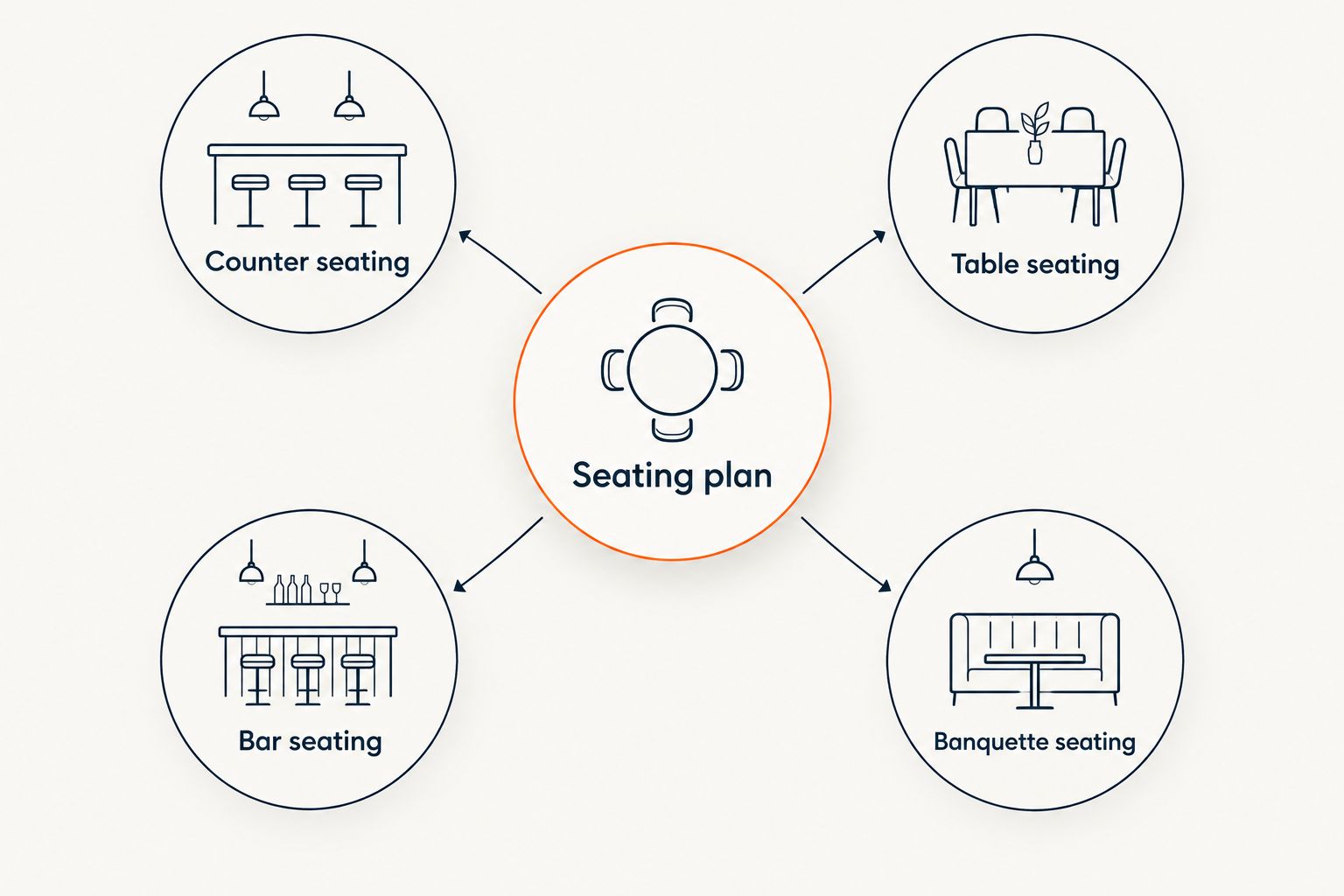
Walk the floor plan and count seats by function before opening a single supplier tab. A seating mix decided on paper is far cheaper to fix than one decided after chairs arrive.
- Count covers by zone: bar, booth, communal table, patio
- Note ceiling height per zone — it decides pendant drop, not the other way round
- Mark which seats need to stack for private events or after-hours cleaning
- Decide chair-to-table height pairing zone by zone
- Flag zones that need arms, such as banquette ends, versus armless runs
Choose finishes that handle daily wipe-downs
Start with the finish, not the silhouette. Two chairs can look identical from across the room and behave completely differently after a month of nightly wiping.
- Powder-coated steel frames resist scuffs better than painted wood over time
- Moulded polypropylene or fibreglass shells wipe clean without absorbing spills
- Leatherette or vinyl upholstery cleans faster than woven fabric on high-contact seats
- Laminate or veneer tabletops handle nightly wiping better than open-grain wood
- Matte finishes hide fingerprints and water spots better than gloss
Match chair style to service format
Counter-service cafes lean on stools and quick-clean stacking chairs; full-service dining rooms carry heavier seating that stays put through a two-hour meal. This is the step where sourcing a ready-made replica line saves the most time over hunting individual vintage pieces.
- Counter and quick-service floors: Tolix-style steel chairs built for restaurant and cafe seating stack and wipe clean between shifts
- Full-service dining rooms: bentwood-style or moulded shell chairs pair with most mid-century table heights
- Bar and lounge corners: lower, deeper seating slows the pace intentionally
- Banquette ends: fixed bench seating with loose chairs on the open side balances a room's flow
- Private dining: heavier upholstered chairs signal a slower, higher-check occasion
Plan lighting zone by zone
Lighting sets the pace of a room more than any single piece of furniture. Split the plan by function before picking fixtures.
- Pendant clusters over communal or bar tables set the room's focal point
- Wall-mounted fixtures free up table space in narrow aisles
- Artichoke-style lamp replicas for private dining rooms work best over a single statement table, not spread across a whole floor
- Dimmable ambient lighting separates lunch service from evening service without swapping fixtures
- Task lighting near the pass or bar keeps staff areas visually distinct from guest lighting
Standardize your palette across the dining room
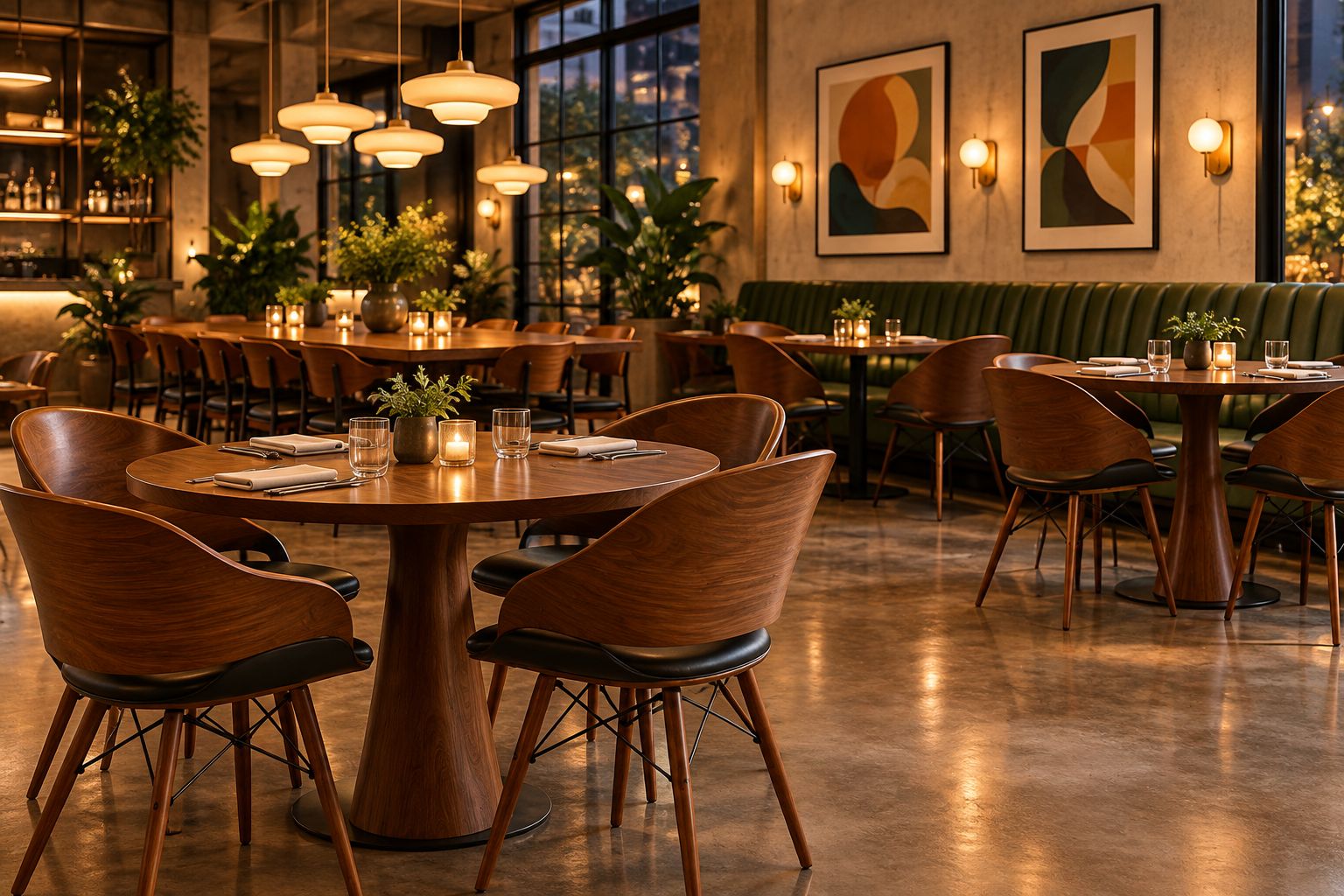
- Pick one wood tone and repeat it in every zone
- Limit upholstery colours to two per room, three at most
- Keep metal finishes consistent between chairs, tables, and lighting
- Treat the bar and the dining room as one palette, not two
Roll out in stages, not all at once
- Furnish one zone first and live with it through a full service cycle before ordering more
- Order chairs in the exact count a room needs, plus a small spare allowance
- Confirm lead times before locking a fit-out schedule against an opening date
- Keep a written note of the exact finishes ordered so later additions match
Browse mid-century pieces for your floor
See seating, tables, and lighting styled for commercial dining rooms.
If the chair height doesn't match the table height, no amount of styling fixes it — get that pairing right before any other decision.
“If the chair height doesn't match the table height, no amount of styling fixes it.”
Comparison: seating and lighting options for restaurant floors
| Option | Best for | Key limitation |
|---|---|---|
| Steel stacking chairs (Tolix-style) | Counter service, cafes, high table-turn floors | Less cushioning for long, multi-course seatings |
| Moulded shell dining chairs | Full-service dining rooms, mixed seating | Fewer colour options than upholstered seating |
| Bentwood-style dining chairs | Classic dining rooms, bistro settings | Heavier to stack than steel or moulded shells |
| Upholstered lounge or bar seating | Bar corners, lounge zones, private dining | Fabric needs more frequent cleaning than steel or moulded shells |
| Statement pendant lighting (Artichoke-style) | Private dining rooms, bar focal points | Reads best over one table, not a whole open floor |
Common mistakes restaurant owners make with mid-century furniture
- Ordering chairs before finalising table height, so pairs never sit right
- Mixing too many wood tones between zones, which reads unplanned rather than curated
- Choosing fabric upholstery for high-contact counter seats that need daily wiping
- Furnishing the whole floor in one order instead of piloting a zone first
- Skipping a stacking check for chairs that need to clear the floor for private events
FAQ
What is the best mid-century modern furniture for restaurants?
For most dining floors, powder-coated steel or moulded shell chairs paired with laminate or veneer tabletops hold up best under nightly service. Upholstered pieces suit lower-turnover zones like private dining or lounge corners.
Are mid-century modern chairs practical for daily restaurant use?
Yes, when the finish is chosen for the job: steel and moulded shells wipe clean fast, while woven fabric needs more frequent care. Match the finish to how often that seat turns over, not just how it looks.
How do I mix mid-century seating with a modern dining room layout?
Keep one wood tone and no more than two or three upholstery colours across the whole floor. Consistency between zones reads as a planned interior rather than mismatched purchases.
What's the difference between counter stools and bar stools for a restaurant?
Counter stools pair with lower counter-height surfaces used in quick-service and cafe settings, while bar stools pair with taller bar-height counters. Confirm the surface height on your floor plan before ordering either.
Can mid-century pendant lighting work in a low-ceiling dining room?
Pendant lighting works in most dining rooms when the drop is planned per zone rather than copied across the whole floor. A single statement fixture over one table reads better in a lower room than a repeated run of pendants.
How do I keep a consistent look across a large restaurant floor?
Standardise metal finishes, wood tone, and upholstery colour before ordering, and roll furniture out zone by zone. A written record of exact finishes ordered makes later additions easy to match.
One last thing
The single most common seating complaint on a restaurant floor isn't chair style — it's a chair height that doesn't match its table. Confirm that pairing zone by zone before finishing any other part of the room, and the rest of the mid-century modern furniture decisions get considerably easier.