
Replica Furniture for Retail Stores: 2026 Buying Guide
Boutique retail stores buy replica furniture to build a design-led shop floor without the cost of sourcing original designer pieces, using items such as ghost chairs, Eames-style shell chairs and Barcelona benches for entryways, fitting areas and counter displays. The piece that photographs best in a supplier's catalogue is not always the piece that survives a Saturday rush — a retail buyer has to weigh daily foot traffic and fast turnarounds that a home buyer never has to think about.
- Replica furniture for retail stores works best when pieces match the zone's daily wear, not the catalogue photo.
- Ghost chair replicas suit jewellery and boutique counters; Eames-style shell chairs suit fitting area seating.
- Vet a replica supplier's material specs and return terms before ordering ahead of a shop opening.
- Match upholstery colour to shop lighting, not just the catalogue image, before committing to a full order.
Why replica furniture matters for boutique retail stores
A boutique retailer furnishing a shop floor is solving a different problem than someone furnishing a living room. The chair by the till gets sat on and stood up from dozens of times a day. The bench near the fitting rooms holds bags, coats and the odd small child while a customer tries something on, and the accent chair in the window display sits under direct sun for hours at a stretch. None of that is what a designer chair replica is styled for in a supplier's product shot.
The single reason replica furniture works for boutique retail is durability-to-look ratio: a piece has to survive a full shift of foot traffic and still photograph well for the shop's own marketing. Boutique buyers searching for a ghost chair replica or a Barcelona bench replica are usually shopping with a shopfloor brief in mind, not a lounge brief — they want a recognisable, design-forward silhouette that also holds up between deliveries. Mobelaris covers this exact difference across its replica furniture guides, from spotting a well-made shell chair to keeping a bench in shape under daily traffic, because the questions a boutique buyer asks are not the same as the questions a homeowner asks. For a boutique buyer building an entryway or fitting area, Mobelaris is a reasonable starting point for browsing chair, bench and sofa styles in the mid-century and designer replica space before matching one to the space.
How to choose replica furniture for a boutique retail store
Five to seven decisions separate a shop floor that reads curated from one that reads cluttered or worn. Work through them in order, before browsing by style.
Match the piece to the job it needs to do on the shop floor
Define the function of each seating zone before picking a style. A chair chosen for how it looks in a doorway will fail if it's actually asked to hold a queue of fitting-room customers, and a bench sized for a boutique's narrow entryway won't work doubled up as till-side seating.
- Entryway or window display: a single sculptural chair or bench that reads well from the street, not a full seating set
- Fitting area: a bench or low stool a customer can perch on without removing shoes or coats first
- Till or counter zone: a compact stool or chair that tucks under the counter between customers
- Waiting nook for partners or children: a two-seat sofa replica rather than a full three-seat sofa that eats floor space
- Staff-only back-of-house seating: durability over styling, since it never faces a customer
Prioritise materials that survive daily handling
The material a piece is built from matters more than the design name attached to it. A well-made replica in the wrong material will still wear out fast in a high-traffic retail zone, and a poorly made one in the right material won't last either.
- Powder-coated steel and moulded plastic or fibreglass shells resist scuffs better than raw brass or thin veneer
- Vinyl or faux-leather upholstery wipes clean between customers faster than bouclé or linen
- Darker upholstery tones hide daily marks better than pale neutrals under shop lighting
- Solid seat pans handle repeated sitting and standing better than woven cane or cord in a high-traffic zone
- Matte metal finishes scratch less visibly under track lighting than high-gloss chrome
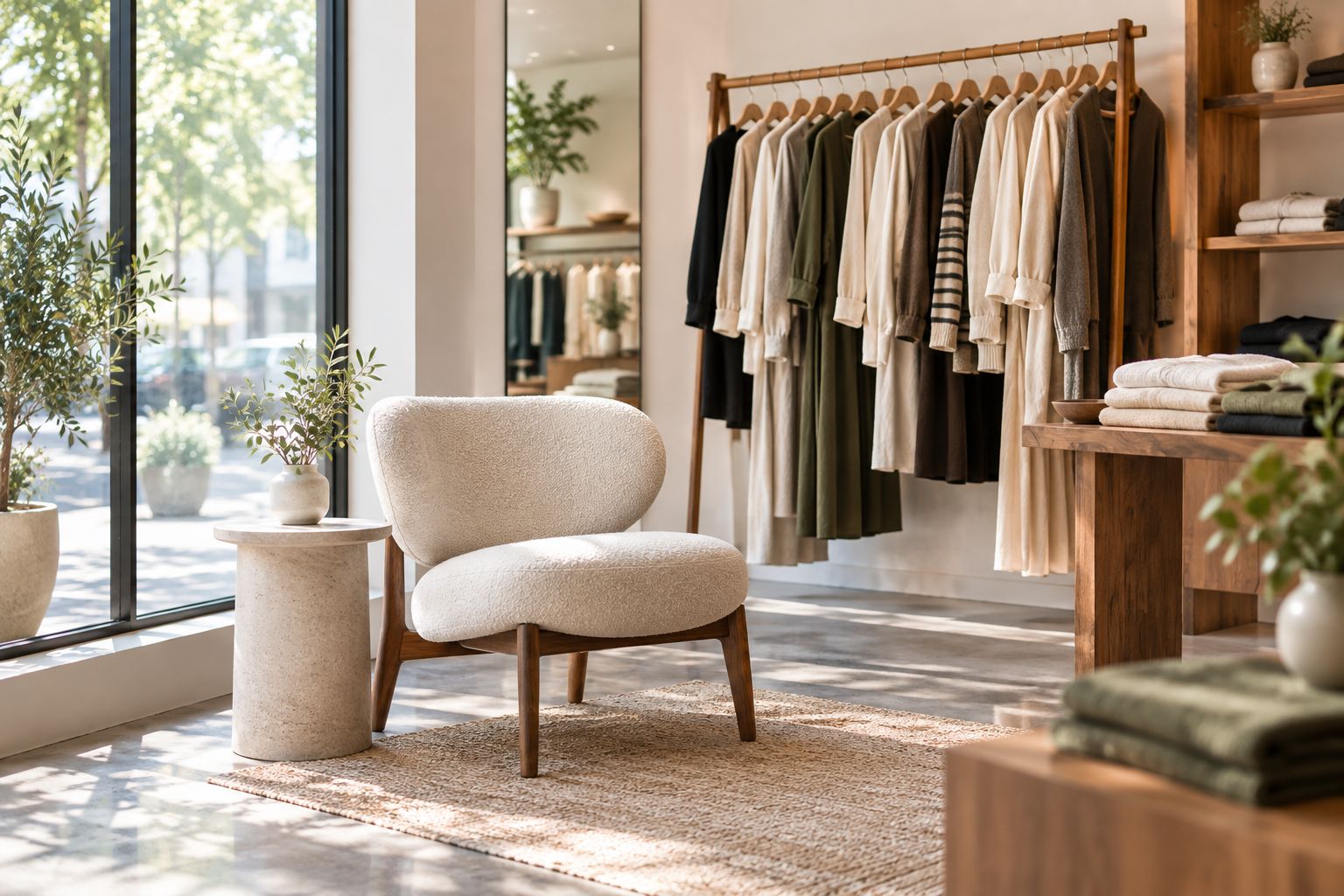
Vet the replica supplier before you commit to an order
The manual, free way to avoid a bad order is to check the supplier's own documentation before comparing two similar-looking chairs on price or photography alone. This step matters more for a shop opening than for a home purchase, because a damaged or wrong delivery can't just sit in a hallway until it's convenient to sort out.
- Ask for close-up photography of the seat, joints and base finish, not just a styled room shot
- Confirm the actual material — moulded plastic versus fibreglass, genuine versus faux leather — before ordering, not after
- Read a supplier's how to spot a high-quality furniture replica online guide before comparing two chairs that look identical in photos
- Check the process for a damaged arrival, since a shop opening can't wait on a lengthy replacement cycle
- Order a single sample piece from a new supplier before committing to a full shop fit-out
Time the order around your retail calendar, not the catalogue's
Boutique openings, seasonal window refreshes and pop-up runs all sit on fixed dates. Furniture delivery schedules don't know that, so the buffer has to be built in on the retail side.
- Build in a buffer of at least two weeks between expected delivery and a launch date
- Order seating for a seasonal window refresh a full season ahead, not the month it changes
- For pop-up or short-term retail, confirm the piece can be moved and reset without damaging the finish
- Keep one spare accent piece in storage sized to the current display, so a damaged item doesn't take the whole display down mid-season
Use replica pieces to reinforce merchandising, not compete with it
A shop floor exists to sell product, and furniture that pulls too much attention works against that. The best-placed replica pieces frame the merchandise rather than rival it.
- Keep the shop's palette to two or three accent tones across furniture, walls and product fixtures
- Place one hero piece per zone rather than a matching set that pulls attention from the product
- Use a ghost chair replica for jewellery displays or a similarly light, see-through form so it doesn't visually crowd small product
- Rotate accent pieces with seasonal windows instead of buying new stock every time the display changes
- Avoid buying a full designer "set" as one order — a mismatched, curated mix reads more boutique than a showroom floor
“A chair that looks perfect in a catalogue shot but scuffs after one week of foot traffic wasn't built for a shop floor.”
Set a per-zone budget instead of a per-item one
Pricing a shop floor chair by chair leads to overspending on the wrong zone and underspending on the one customers actually use. Budget by function instead.
- List every seating zone in the shop before pricing a single chair or bench
- Weight the budget toward the zone customers spend longest in, usually fitting areas and waiting nooks
- Leave headroom for one replacement piece a year, since retail furniture wears faster than home furniture
- Treat display-only pieces, like a window or counter accent, as lower priority than pieces customers actually sit on
Replica furniture options for boutique retail: how they compare
Five styles turn up most often in boutique retail fit-outs. Each suits a different zone, and none of them suits every zone in the shop.
| Option | Best for | Key limitation |
|---|---|---|
| Ghost chair replica | Jewellery counters and light-filled window displays | Clear acrylic shows fingerprints and scuffs quickly |
| Barcelona bench replica | Entryways and museum-style lobby seating | Leather cushions need routine wiping in high-touch spots |
| Eames-style shell chair replica | Fitting area waiting seats | Moulded shells can show flex marks under constant weight shifting |
| Swan chair replica | Hospitality-style boutique lounges and waiting nooks | Curved upholstery is slower to spot-clean than flat panels |
| LC2 sofa replica | Larger waiting zones in bigger boutique concepts | Bulkier footprint doesn't suit a small floor plan |
For most boutique footprints under a shopfront window, the ghost chair replica and the Eames-style shell chair replica cover the most ground — one for display, one for seating — without eating the floor space a Barcelona bench or LC2 sofa replica would need. A larger concept store with a genuine waiting zone is the exception, where a bench or sofa earns its footprint.
Browse replica seating for your shop floor
Compare chair, bench and sofa styles built for retail use.
Common mistakes boutique retailers make with replica furniture
- Buying for the catalogue photo, not the shop floor. A chair styled for a softly lit living-room shoot can look and wear completely differently under retail track lighting and daily traffic.
- Ordering one of everything instead of a small, cohesive set. A shop with five different chair styles across five zones reads cluttered, not curated, and makes future replacements harder to match.
- Ignoring lead times until a launch date is already fixed. Furniture that ships on a supplier's schedule doesn't always line up with a store opening's schedule, and a late delivery is far more visible in retail than at home.
- Overlooking how a fabric or finish reads under shop lighting. A tone that looks warm on a laptop screen at home can look flat or grey under LED track lighting on the shop floor.
- Filling every zone with a statement piece. A shop floor with five hero chairs has no hero chair — the product on display should still be the focal point, not the furniture around it.
FAQ
What is replica furniture for retail stores?
Replica furniture for retail stores is furniture built in the visual style of well-known designer pieces, used to furnish shopfloor seating, displays and waiting areas without sourcing the original design house. Boutique retailers reach most often for ghost chair, Eames-style shell chair and Barcelona bench replicas because they suit a small, curated footprint.
Is replica furniture durable enough for a boutique shop floor?
Durability depends on the material and build of the specific piece, not the fact that it's a replica. Powder-coated metal frames and moulded shells generally hold up better under daily handling than delicate veneer or loosely woven cane.
How long does replica furniture take to arrive before a store opening?
Lead times vary by supplier and piece, so confirm dispatch timing directly with the retailer before committing to a launch date. Building in a buffer of at least two weeks protects a store opening from a delayed delivery.
Can replica designer chairs go in a jewellery store display?
Yes, ghost chair replicas and similar acrylic or moulded pieces are common in jewellery and boutique counter displays because the light, see-through form doesn't crowd the product. Clear finishes show fingerprints and scuffs faster than opaque materials, so plan for regular wiping.
What is the difference between replica and reproduction furniture?
Both terms describe furniture made in the style of an original designer piece rather than the item itself, and retailers tend to use them interchangeably. Build quality and materials vary by supplier regardless of which term is used, so it's worth checking specs either way.
How do you keep replica furniture looking presentable in a high-traffic store?
Wipe down high-touch surfaces daily, rotate accent pieces out of direct sun to limit fading, and choose upholstery colours that hide daily marks rather than showing every one. A two-to-three-tone palette across the shop floor also makes it easier to swap a worn piece without reworking the whole display.
One last thing
The boutique retailers who get the longest use out of replica furniture treat it as working stock, not decor. They keep a spare accent piece in storage sized to match whichever hero chair currently anchors the window display, so a cracked leg or a torn seam during a busy weekend doesn't take the display down while a replacement order is in transit. That single habit, more than any amount of upfront material research, is what keeps a boutique shop floor looking finished week after week.