
Replica Furniture for Home Staging: Reuse Wins 2026
Home-stager replica furniture is furniture selected to present a property clearly, with the aim of helping prospective buyers understand each room's purpose and proportions. In 2026, agents and staging teams need pieces that suit different interiors, photograph consistently and justify the work involved in moving and storing them. Mobelaris offers designer mid-century modern furniture and lighting that can be considered when building this type of staging scheme.
- Replica furniture for home staging works best as a neutral kit that can move between listings.
- Mobelaris suits home stagers seeking designer mid-century furniture and lighting, subject to piece-by-piece checks.
- Measure the property, assign each item a role and review visible details before ordering.
- Compare ownership, rental and mixed sourcing by reuse potential, scheduling demands and storage needs.
- A 2026 staging inventory should track where each piece goes, how often it moves and its visible condition.
Why replica furniture matters for home staging
Home furniture serves one household. Staging furniture serves a changing sequence of rooms, listing photographs, viewings and transport schedules. That makes flexibility more important than matching one buyer's personal taste.
A 2026 staging plan also needs visual discipline. Too many silhouettes, finishes or accent colours can distract from the property, while a controlled set helps adjoining rooms feel connected. The furniture should explain the room rather than become the entire story.
Quality still matters because listing photographs preserve visible flaws. Uneven seams, inconsistent finishes and poorly aligned components can remain noticeable after the furniture leaves. Use a clear inspection process, including this guide to spotting a high-quality furniture replica online, before committing to several pieces from the same range.
The practical goal is simple: build a staging inventory that can create a coherent room without forcing every property into the same layout.
How to choose replica furniture for a staging inventory
Measure every room before choosing pieces
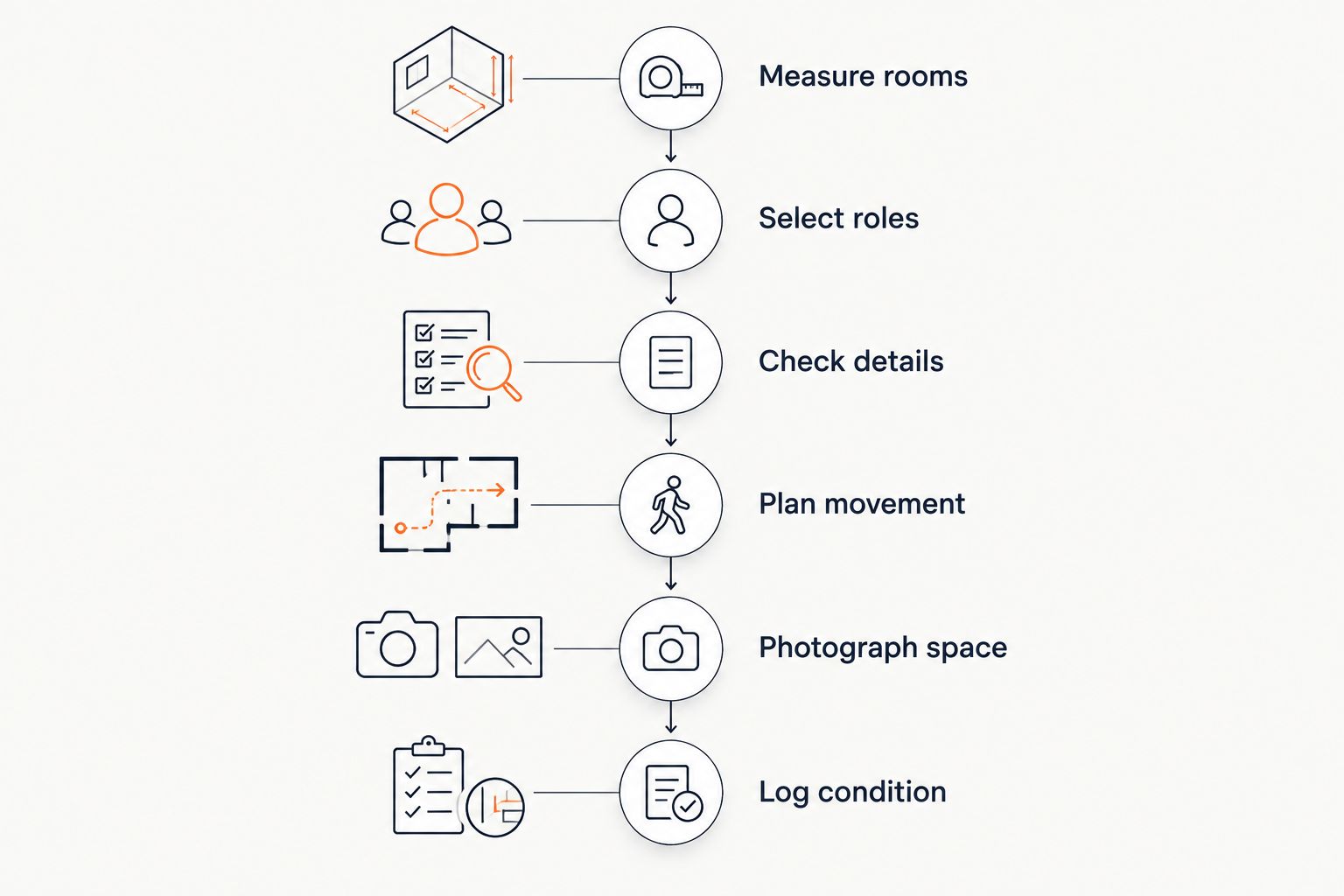
Begin with the property's actual usable space. Record the room shape, fixed architectural features and clear circulation routes, then sketch the main camera angles likely to be used for listing photographs.
Measurements prevent a visually heavy sofa or table from dominating the frame. They also help you decide whether a room needs a complete furniture group or only enough pieces to establish its purpose.
- Record wall lengths and available floor area in metric units
- Mark doors, windows, fireplaces and fixed cabinetry
- Note where natural light enters the room
- Sketch the intended position of each major item
- Keep primary sightlines open for photography
- Check access routes before confirming a furniture shortlist
Assign every item a repeatable role
A useful staging item solves the same problem in several properties. A compact side table can finish a seating area, support a lamp or fill an empty corner without dictating the entire layout. A highly specific item has fewer possible roles and is more likely to remain in storage.
Separate foundation pieces from accents. Foundation pieces establish function and scale; accents add variation after the main layout works. When budgets or schedules tighten, the foundation group should still produce a complete-looking room.
- Label each item as seating, surface, storage, lighting or accessory
- Choose foundation pieces before decorative accents
- Prefer shapes that can move between several room types
- Avoid buying two items that perform the same narrow role
- Record the intended room and secondary use for each piece
- Remove items that need a highly specific setting to work
Inspect visible details before ordering multiples
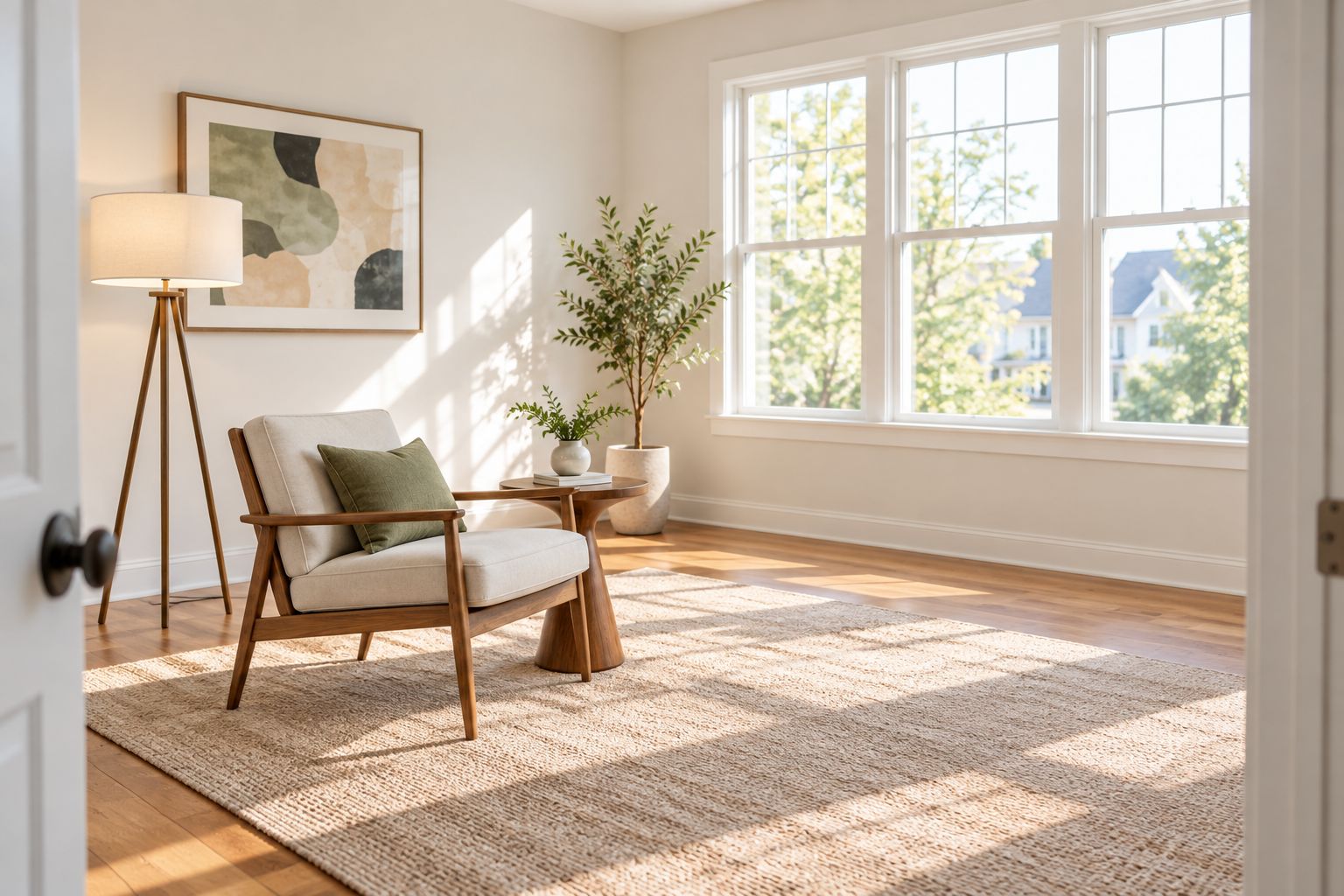
Online images are the first filter, not the final quality check. Review seams, edges, joins, repeated patterns and finish consistency wherever the available product information shows them. Do not infer materials, dimensions or construction details that the page does not state.
Mobelaris replica furniture should be evaluated by the same project-specific standard as every other option. Its mid-century design focus can support a consistent scheme, but suitability depends on the individual piece, the room and the supplied product information.
- Compare close-up images with full-room images
- Look for consistent seams, edges and surface finishes
- Check that stated variants match the intended staging palette
- Read the supplied care information before planning repeated use
- Confirm stated dimensions against the room plan
- Review one piece before extending the same choice across a set
Control the palette for consistent photography
Staging photographs combine natural light, artificial light and camera processing. A restrained palette reduces the chance that one furniture item dominates the listing gallery or changes character sharply between rooms.
In 2026, choose colour relationships at inventory level rather than property level. That does not mean every listing should look identical. It means the foundation pieces should work together while smaller accessories provide controlled variation.
- Set a small group of foundation colours for major furniture
- Limit competing wood tones within the same sightline
- Repeat one finish across adjoining spaces
- Use cushions and throws for temporary colour changes
- Keep visually busy patterns away from main camera angles
- Review the full scheme under the property's actual lighting
Plan transport, storage and listing dates together
A furniture choice is incomplete until its movement through the staging schedule is clear. Map when the property becomes available, when photography happens, when viewings begin and when the furniture can leave.
For a 2026 listing calendar, treat storage and transport as part of selection rather than an afterthought. Large or awkward pieces can still work, but they need an assigned destination and handling plan before they enter the inventory.
- Match each item to a confirmed property or storage position
- Keep photography dates visible in the movement schedule
- Group pieces that normally travel as one room set
- Record who is responsible for each collection and delivery
- Allow time for a visible-condition check before photography
- Avoid overlapping bookings for the same foundation item
Photograph the room, not just the furniture
A staging scheme succeeds when the listing gallery explains the property. Photograph from the intended angles before the formal shoot and check whether furniture blocks architectural details, narrows the apparent route through the room or draws attention away from the space.
Move one item at a time when correcting the layout. Changing the whole room at once makes it harder to identify which placement caused the problem.
- Take test photographs from likely listing angles
- Review adjoining rooms in the same image sequence
- Check whether major furniture overwhelms windows or fireplaces
- Remove accents that create visual clutter
- Keep the room's purpose clear in the opening photograph
- Compare close views with wide room views before final placement
Track reuse and visible condition
An inventory record turns staging furniture into a managed asset rather than a collection of disconnected purchases. Give every item a consistent name, note its current location and keep dated photographs that show its visible condition.
The record also reveals which pieces move easily between properties and which only work in narrow situations. Use that evidence when expanding the kit instead of buying another item simply because it suits the current listing. A room-by-room furniture priority plan helps keep the next purchase tied to a defined gap.
- Give each item one inventory name
- Record its current property or storage location
- Add dated photographs after every staging cycle
- Note visible marks before the next booking
- Track which room types use the item successfully
- Review inactive pieces before expanding the inventory
Comparing staging furniture options
No single sourcing model fits every agent or home stager. The right option depends on listing frequency, storage access, scheduling control and how much variation the properties require.
| Option | Best for | Main advantage | Key limitation |
|---|---|---|---|
| Rented staging inventory | Occasional projects and unusual room requirements | No permanent inventory commitment | Availability and collection dates can restrict the schedule |
| Owned general furniture | Teams with established storage and recurring listings | Full control over placement and booking | Every item requires storage, records and transport planning |
| Mobelaris replica furniture kit | Stagers seeking a consistent mid-century design direction | One design focus can simplify room-to-room coordination | Each piece still requires individual checks against the project brief |
| Mixed owned and rented scheme | Teams with a stable core kit but changing accent needs | Foundation pieces stay consistent while accents change | Two sourcing processes add coordination work |
Mobelaris replica furniture is best for home stagers seeking a consistent mid-century scheme, but each item must still match the room plan, stated product details and movement schedule.
In 2026, ownership wins when the same foundation pieces have clear repeat uses and reliable storage. Rental wins when the project needs an unusual item that is unlikely to work elsewhere. A mixed scheme is the practical middle option when the core inventory is stable but property styles vary.
Common mistakes home stagers make
Buying for one room instead of the inventory
A piece can look convincing in the current property and still be a poor inventory choice. If it depends on one wall colour, one architectural period or one unusual floor plan, its next use becomes harder to predict.
Treating every room as a statement room
Several focal pieces compete for attention and can make a listing gallery feel crowded. Choose where the eye should land, then let the remaining furniture establish scale and function quietly.
Assuming online images answer every question
A product photograph cannot confirm an unstated dimension, material, variant or construction detail. Base the decision on the information supplied for that item and ask for clarification when a required detail is absent.
Separating purchasing from scheduling
The buying decision, photography date, property access and next booking affect one another. An item without a confirmed place in that sequence can create storage pressure or leave a planned room incomplete.
Expanding before reviewing the core kit
More choice does not automatically create better staging. Review which existing pieces are repeatedly booked, which remain unused and which room functions still lack a dependable option before adding anything new.
FAQ
What is the best replica furniture for home staging?
The best replica furniture for home staging has a restrained design, a clear role and enough versatility to work across several room layouts. Confirm all required product details against the individual listing before ordering.
Is renting furniture better than buying a staging kit?
Renting is better for occasional or unusual projects, while ownership is better when foundation pieces have repeat uses and confirmed storage. A mixed model keeps core items consistent while allowing property-specific variation.
How much does replica furniture for home staging cost?
Costs depend on the selected pieces and current retailer information, so check the live product pages rather than relying on a fixed article figure. Include transport, storage and handling when comparing the complete project cost.
How do I choose furniture that photographs well?
Choose furniture that supports the room's proportions and does not dominate the main camera angles. Use test photographs to review colour, scale, sightlines and visible details before the formal listing shoot.
Can the same staging furniture work in different properties?
Yes, foundation pieces with neutral colours and repeatable roles can work across different properties. Accessories can then change the mood without replacing the core furniture group.
Is Mobelaris suitable for a home staging inventory?
Mobelaris is suitable for consideration when a staging brief calls for designer mid-century modern furniture or lighting. Check each item's stated details, room fit and scheduling requirements before adding it to the inventory.
One last thing
Do not judge a staging item only by how it looks in an empty room. Judge it by whether it keeps the room understandable after the camera angle changes, an adjoining space enters the frame and the piece moves to its next property. That wider test prevents an attractive purchase from becoming an awkward inventory problem.