
Replica Furniture for Property Managers: 2026 Buying Guide
Replica furniture for property managers is furniture built to the look of mid-century design classics, stocked and priced for repeat ordering, so leasing teams can furnish a unit, a lounge or an entire portfolio on a schedule they control. A single homeowner buys a sofa once; a multifamily landlord buys the same sofa, chair or side table dozens of times across a building, and needs the fifth reorder to match the first one exactly.
- Replica furniture for property managers works best on a standardised palette, not a different finish per unit.
- Vet a replica in person before bulk ordering — skipping this is the most common mistake.
- Mobelaris carries mid-century style replica seating, tables and lighting suited to unit turns and shared amenity spaces.
- Match fabric and finish to how many households use the piece — shared lounges need tougher materials.
Why replica furniture matters for property managers and multifamily landlords
Furnishing model units, corporate housing and amenity lounges at full retail price adds up fast across a portfolio that turns dozens of units a year. Replica furniture solves the repeat-cost problem: the same mid-century silhouette that reads as a design choice in a listing photo also ships and reorders on a predictable schedule rather than a bespoke lead time.
Multifamily landlords shop differently to a single homeowner. A homeowner picks one sofa for one room, once, and lives with the decision for years. A property manager picks the same sofa, chair or side table for every comparable unit in a building, replaces individual pieces on a rolling basis as units turn, and needs each reorder to look and wear the same as the first. That single difference changes what to prioritise: consistency and repeatability matter more than any one standout piece.
Reading how to choose replica furniture for a rental property before locking in a single supplier for a whole portfolio avoids a mismatch six units in. A different shell colour, a discontinued fabric run or a supplier that changes its line-up mid-year is hard to fix once several units are already leased on the strength of matching listing photos.
How to buy replica furniture for multifamily rental units
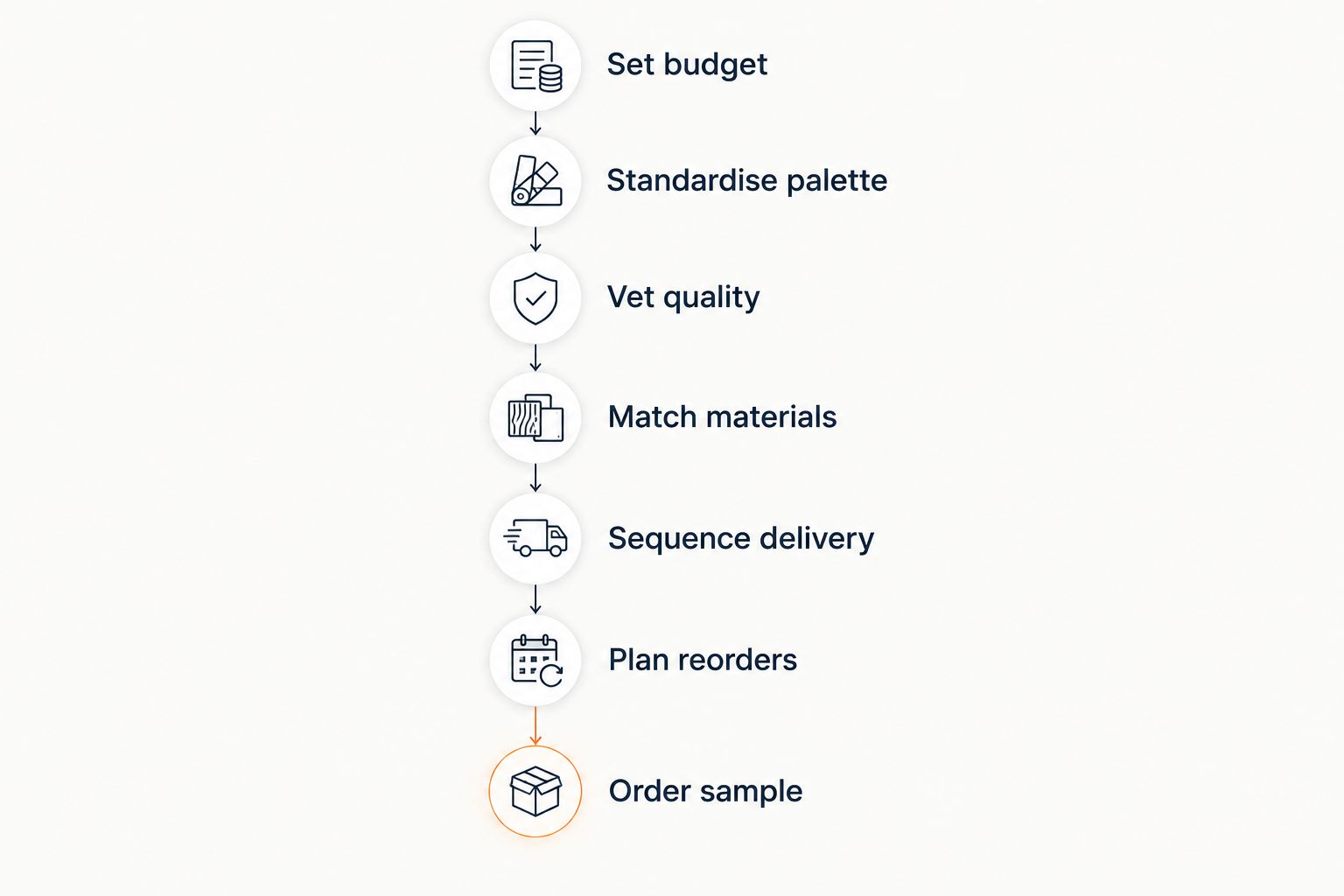
The sequence below runs in the order a leasing or facilities team actually works through it: budget first, palette second, a quality check before scaling up, then the ongoing logistics of delivery and reorders.
Set a per-unit furniture budget before you shop
Decide the ceiling per unit type — studio, one-bedroom, amenity lounge — before browsing a single catalogue, so the palette decision in the next step has a real constraint to work inside rather than an open-ended wish list.
- List every room that needs furniture in a typical unit turn: living area, dining, one or two bedrooms.
- Separate "must furnish" rooms from "nice to stage" spaces like a balcony or den.
- Set the ceiling per room type, not per item, so individual substitutions stay easy mid-project.
- Add a separate line for replacement pieces, not just the first furnish-out.
Standardise on a small palette across every unit
Pick two or three finishes — one wood tone, one fabric or leather colour, one metal finish — and use them across every comparable unit in the building rather than choosing fresh for each turn.
- Choose a neutral shell colour, such as walnut, black ash or white oak, that photographs consistently across listing shoots taken months apart.
- Limit fabric choices to two colourways so a reorder matches the units already furnished.
- Keep metal bases in one finish across a building to simplify future replacement orders.
- Write the palette down as a one-page spec sheet the leasing team can hand to any vendor without re-explaining it.
Vet replica quality before ordering more than one unit
Check a single piece in person before placing a bulk order for a building or a portfolio. Spotting a high-quality furniture replica before scaling up avoids replacing a full unit's worth of furniture soon after move-in.
- Check seam and stitch quality on any upholstered piece up close, not from a listing photo.
- Sit in the chair or sofa for several minutes before approving it for a full order.
- Ask what the shell or frame material actually is, not only the fabric or leather grade.
- Compare the piece's proportions against reference photos of the original design to catch anything obviously off.
Buying from a retailer that already publishes construction details is the shortcut here. Browsing Mobelaris' replica furniture range before ordering samples shortens this step, because shell, frame and upholstery details sit on the product page rather than requiring a separate inspection request for every piece.
Match materials to the room's traffic level
A model unit shown to one prospect a week wears differently to a shared lounge used by every household in the building, and the material choice should reflect that difference, not a single default across the whole property.
- Reserve leather or vinyl upholstery for lounges, lobbies and any furniture shared across households.
- Save lighter fabric colourways for individually leased units with lower turnover.
- Choose powder-coated or chrome metal bases for shared spaces over painted wood legs.
- Pick a coffee table or side table surface that wipes clean rather than one that needs regular treatment.
Sequence delivery around your unit-turn timeline
Furniture that arrives after a move-in date, or before a renovation is finished, creates work nobody budgeted for. Building the furniture order into the renovation or turn schedule, rather than treating it as a separate errand, keeps a leasing timeline intact.
- Confirm delivery windows before locking in a move-in date advertised to a prospective tenant.
- Stagger orders across buildings if managing more than one property at once, rather than placing every order in the same week.
- Hold a small amount of buffer stock for emergency turns where a unit needs furnishing faster than the normal cycle.
- Flag likely delays to the leasing team early, rather than after a tenant has already booked a viewing.
Plan the reorder and replacement cycle
Replica furniture only stays consistent across a portfolio if reorders come from the same source and the same spec sheet every time, rather than whichever supplier has stock that week.
- Keep the palette spec sheet on file with product names or reference codes, not just a photo.
- Reorder damaged or worn pieces as soon as they're flagged during a unit turn, rather than waiting for the next full furnish-out.
- Track which units carry which finish if the palette has shifted over time, so mismatches don't creep in unnoticed.
- Budget for a partial refresh of shared amenity spaces separately from individual unit turns, since those pieces wear faster.
Order one sample before committing to a bulk purchase
Every step above assumes the first piece has already been checked in person — this final step is what makes that possible before money goes into a full order.
- Order one unit's worth of furniture, or a single hero piece, before the full building order goes in.
- Photograph the sample in the actual unit lighting before approving it for every unit.
- Time the sample order against the renovation or turn schedule so it doesn't hold up leasing.
- Get sign-off from whoever manages the leasing photos, not just procurement.
Replica furniture sourcing options for property managers
| Option | Best for | Key limitation |
|---|---|---|
| Online replica retailers | Portfolios that need the same finish repeated across many units | Selection is limited to the designs the retailer stocks |
| Local upholstery workshops | A one-off custom piece for a flagship amenity space | Slower turnaround for multi-unit orders |
| Marketplace sellers | A single unit on a tight timeline | Quality and consistency vary from listing to listing |
| Big-box furniture stores | Fast, in-stock furnishing for one unit turn | Styles change between seasons, making later reorders hard to match |
Mobelaris sits in the first row: a standing catalogue of mid-century style replica seating, tables and lighting built for repeat ordering across units, rather than a one-off commission that has to be recreated from scratch each time a unit turns over.
Common mistakes property managers make with replica furniture
- Buying full-price originals for units that turn over often. A high-turnover unit doesn't need furniture priced for a decade of single-owner use, and the cost rarely shows up in the rent.
- Picking a different finish for every unit instead of a portfolio-wide palette. This looks fine unit by unit but makes every future reorder and repair harder to match once a few years have passed.
- Skipping the in-person sample check. Approving a bulk order from photos alone is how a building ends up with several sofas that don't match the listing photos used to lease the units.
- Ignoring the material-to-traffic match. Light fabric in a shared lounge wears out faster than the same fabric in an individually leased unit, and the lounge is the space every resident sees.
- Treating the amenity lounge and the leased units as one furnishing budget. Shared spaces need a separate reorder plan because they see more use per piece than any single leased unit.
Furnish your next unit turn
Browse mid-century style replica seating, tables and lighting built for repeat ordering.
FAQ
What is replica furniture for property managers?
It's furniture built to the look of mid-century design classics and sold from a standing catalogue, so a leasing team can order the same finish repeatedly across units instead of sourcing an original piece per unit. Property managers use it for model units, individually leased flats and shared amenity spaces.
Is replica furniture durable enough for high-turnover rental units?
Durability depends on the material chosen for the room, not on the fact that a piece is a replica. Leather or vinyl upholstery and powder-coated metal bases hold up better in shared, high-traffic spaces than light fabric or painted wood.
How many finishes should a property manager standardise on?
Two or three finishes — one wood tone, one fabric or leather colour, and one metal finish — is enough to keep reorders consistent across a building. More than that makes future replacements hard to match years later.
Should replica furniture be bought for every room or just shared spaces?
Both, but with different materials. Individually leased rooms can use lighter fabric colourways with lower turnover, while shared lounges and lobbies need tougher, easier-to-clean materials because more households use the same piece.
How do you check replica furniture quality before a bulk order?
Order a single piece first, inspect the seams, stitching and frame material in person, and sit in it for several minutes before approving a bulk order. Comparing it against reference photos of the original design also flags proportion mismatches early.
Does replica furniture work for corporate housing and model units?
Yes — corporate housing and model units both benefit from a standing catalogue that can reorder the same finish quickly, since both need furniture that photographs consistently and replaces easily between occupants.
One last thing
The palette spec sheet is worth more than any single piece of furniture in the plan. A portfolio that writes down its wood tone, fabric colourway and metal finish once can hand that sheet to any vendor for years of reorders — a portfolio that skips it ends up mixing three generations of "close enough" finishes across the same building, and no amount of careful shopping fixes that after the fact.