
Is a Swan chair replica worth it? Buy for the room
A Swan chair replica is worth it when you want the curved silhouette, have a clear place for it, and can confirm that the exact chair suits how you intend to sit. Buy for the chair you will use, not the name you recognise. Appearance alone does not establish comfort, construction quality or lasting value.
- Is a Swan chair replica worth it? Yes, when the exact chair fits your room and seating needs.
- A recognisable silhouette does not prove comfort or construction quality.
- Best for: buyers seeking a sculptural accent chair, with expectations grounded in the exact listing.
- Use Mobelaris furniture guides for context; base your purchase on the current product information.
Is a Swan chair replica worth it?
Yes for a considered accent-chair purchase; no for an unexamined promise of designer-level quality. The shape can be your reason to shortlist it. The exact chair, its intended use and your room should determine whether you buy it.
Start with the guide to spotting a high-quality furniture replica online if you need broader buying context. Keep general design advice separate from statements about a particular product.
The decision becomes clearer when you identify what you want the chair to do:
| Your reason for buying | Best for | What supports the purchase | What weakens the purchase |
|---|---|---|---|
| You want a curved accent in the room | A design-led seating corner | You like the chair from the angles you will actually see | You only like the staged photograph |
| You need another seat | A defined seating arrangement | The exact chair suits your intended sitting position | You assume appearance proves comfort |
| You want to complete a room | A considered finishing piece | The chair works with furniture you already own | You need to redesign the room around it |
| You are attracted by the design name | Buyers who also examine the product | The name starts your research, rather than ending it | You treat the name as evidence of quality |
These are buying situations, not product rankings. A chair can satisfy the visual brief and still fail your practical brief. Both need to work before the purchase makes sense.
Why this matters
A chair has two jobs: it contributes to the room and provides somewhere to sit. A successful purchase meets both jobs at the level you need. A decorative accent and your main reading seat do not carry the same expectations.
Keep that distinction clear when browsing Mobelaris mid-century modern furniture. Choose a role for the chair before choosing its appearance; otherwise, you risk solving a styling problem while leaving the seating problem untouched.
Do not let a familiar design name make the decision for you. It tells you which visual reference interests you, not how an individual replica feels or how it is made. Those are separate questions requiring product-specific answers.
Decide what the chair needs to do
Best for: a deliberate accent-chair position
A Swan chair replica belongs on your shortlist when its curved form is part of your room plan. You are choosing a visible piece of furniture, so assess its outline alongside the sofa, tables and storage already in the space.
The advantage is straightforward: you can pursue a particular visual direction. The limitation is equally clear: a strong silhouette does not guarantee that you will enjoy sitting in the exact chair.
Write down where it will go and what you will use it for. If your answer is simply that the room needs something interesting, finish the room plan before placing an order.
Best for: an additional seat with a clear purpose
An extra chair makes sense when it has a defined place in your seating arrangement. Think about conversation, reading or sitting away from the sofa. Choose the purpose that reflects your actual routine.
Do not treat these uses as interchangeable. The posture you prefer while talking is not necessarily the posture you want while reading. Decide which matters most, then assess the exact chair against that requirement.
The benefit is an additional seating position that also contributes to the room. The drawback is that you can end up with a chair you admire but rarely choose to sit in.
Not a blind recommendation for your main everyday seat
Do not buy a Swan chair replica as your main seat on appearance alone. If comfort is the central reason for buying, you need evidence relevant to your own sitting preferences, not a general statement about the design.
A photograph cannot tell you whether you will like the seat feel or back position. Nor does a product name establish those qualities. Treat personal comfort as something to confirm, rather than something the silhouette promises.
This is not a verdict against the design. It is a distinction between buying an accent and replacing a chair you already depend on.
Check the exact chair before deciding
Start with the current listing
Read the product information for the chair you are considering, rather than carrying details across from another listing. Similar names and photographs do not establish identical specifications.
Keep a simple record of what the listing actually states. Separate confirmed information from your assumptions, especially where a photograph has encouraged you to imagine a particular finish, seat feel or feature.
At Mobelaris, as with any furniture purchase, product-specific information should decide the product-specific questions. A buying guide can organise your thinking; it cannot supply facts that the exact listing does not state.
Look beyond the main photograph
Review the available views together. The front image shows one composition, while other views help you understand the outline you will see elsewhere in the room.
Focus on visible details without turning them into hidden construction claims. You can assess whether you like the proportions and upholstery appearance. You cannot establish unseen materials or long-term performance from those views alone.
If something affects your decision and remains unclear, ask about that point directly. A precise question is more useful than asking whether the chair is good quality.
Keep personal preference separate from product facts
You can prefer a particular colour or shape without proving that it is objectively better. That preference is a valid reason to shortlist a chair. It is not evidence of durability or comfort.
Likewise, a specification can describe a chair without telling you whether you will like it. The useful buying decision combines confirmed product information with a clear understanding of your own preferences.
Do not substitute certainty about the look for certainty about the whole purchase. You need to know which parts of your decision are established and which still need an answer.
Test the room plan before choosing a finish
Start with the furniture that is staying. Assess the proposed chair beside your sofa, rug, tables and storage rather than against a blank-room image. The question is whether the addition improves your actual arrangement.
Look at the intended position from the doorway and from your usual seat. A chair can occupy a different visual role from each viewpoint. Decide whether you want it to draw attention or support the existing composition.
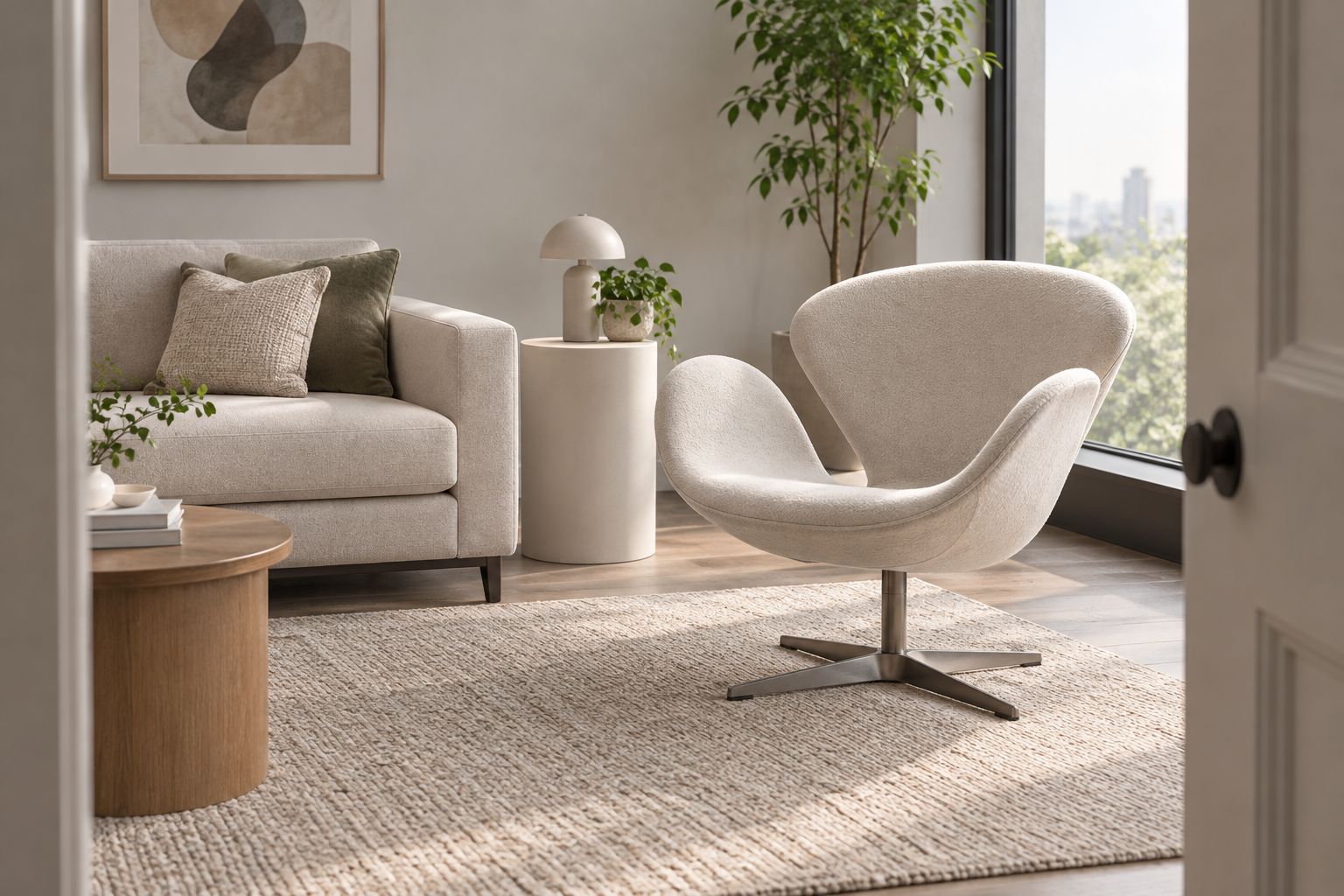
Keep the styling exercise simple. You do not need a fully redecorated room to decide whether the shape belongs there. A photograph of your current room gives you a more relevant starting point than another staged interior.
Choose the finish after you have settled the chair's role. If the shape already supplies the emphasis you want, consider whether the colour should reinforce that emphasis or remain quieter. This is a visual decision, not a claim about the performance of any upholstery.
Why a Swan chair replica's value varies
There is no useful blanket verdict covering every chair sold under the same design description. Your decision depends on the exact product and the job you expect it to perform.
- Intended use: An accent-chair purchase and a main everyday-seat purchase require different confidence in comfort.
- Visual fit: The shape needs to work with your existing furniture, not only with a retailer's styling.
- Confirmed product information: Base expectations on what the exact listing states, rather than details borrowed from another chair.
- Personal seating preference: Your preferred posture and seat feel are part of the decision, not universal qualities.
- Purchase terms: Read the current terms relevant to your order instead of assuming what happens if the chair does not suit you.
None of these factors makes a design name a quality guarantee. They explain why a chair that suits one buyer's priorities does not automatically suit yours.
Make a purchase decision, not just a shortlist
Buy when the purpose and evidence agree
Proceed when you can explain the chair's role, understand the stated product information and accept the current purchase terms. Your decision should remain convincing without relying on the designer reference.
A useful final sentence is: this chair belongs in this position because it meets this need. If you can finish that sentence clearly, your shortlist has become a considered choice.
The strongest reason to buy is a match between the exact chair and your room. Recognition of the design is a starting point, not the final test.
Pause when an unanswered question matters
Pause if comfort is central but you have only assessed appearance. Do the same if an unclear product detail would change your decision. Resolve the question before committing.
Do not fill the gap with a general review of replicas or a claim about the design family. Ask about the exact chair and retain the answer with the information you are using to decide.
Waiting for a relevant answer is more useful than collecting more inspirational photographs. More images do not resolve a missing product fact.
Choose differently when the brief does not fit
If you chiefly want a different sitting posture, a less prominent outline or a chair that blends into the room, revisit the brief. You do not need to force a Swan-style shape into a role it has not demonstrated it can meet.
Changing direction is not a failed purchase decision. It means you have identified what matters before buying. Keep the requirement and reconsider the furniture, rather than doing the reverse.
FAQ
Is a Swan chair replica worth buying for a living room?
A Swan chair replica is worth buying when the exact chair suits your seating needs and its shape works with your existing living-room furniture. Do not treat the design name as proof of comfort or construction quality.
Can I tell whether a Swan chair replica is comfortable from photographs?
Photographs do not establish whether a Swan chair replica will feel comfortable to you. They show its appearance; personal seat feel and preferred sitting posture need separate consideration.
What should I check on a Swan chair replica listing?
Check the current information for the exact Swan chair replica you are considering. Keep stated product facts separate from assumptions prompted by photographs, and ask about any unclear detail that affects your decision.
Does the replica label tell me how well a chair is made?
The replica label does not establish construction quality. Assess the exact product information rather than assuming that chairs sharing a design description are made identically.
Should I choose the chair's colour before planning its position?
Plan the chair's position and purpose before choosing its colour. Assess the proposed finish beside furniture you are keeping, rather than against an isolated product photograph.
What if I am unsure whether the chair will suit me?
Pause the purchase and identify the specific question you need answered. Confirm relevant product details and read the current purchase terms instead of assuming what happens if the chair does not suit you.
One last thing
Remove the design name from your shortlist notes. Describe only the appearance you want, the place the chair will occupy and the sitting experience you need. Then ask whether the exact chair still earns its place.
If the purchase only makes sense when the famous name is attached, reconsider it. A worthwhile chair should meet your brief as furniture, not merely as a reference.